PPS (Polyphenylene Sulfide) sheet is a semi-crystalline high-performance engineering thermoplastic. It is widely used in applications where chemical resistance, dimensional stability and reliable performance at elevated temperatures are important.
Compared with many conventional engineering plastics, PPS offers a combination of low moisture absorption, good chemical resistance and relatively low thermal expansion. These characteristics make it suitable for precision components used in industrial, electrical and chemical processing environments.
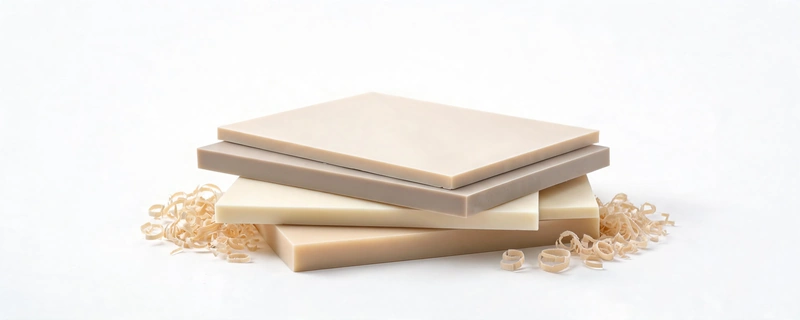
1. What Is PPS Sheet?
PPS sheet is a semi-finished plastic material manufactured from polyphenylene sulfide resin. It can be supplied in different formulations, including unfilled natural PPS, glass-fiber reinforced PPS and mineral-filled PPS.
The material is commonly available in natural light brown or tan colors, as well as black and other grade-dependent colors. Its exact appearance and mechanical properties depend on the resin formulation and manufacturing process.
2. Main Types of PPS Sheet
Natural PPS Sheet
Natural PPS is an unreinforced grade. It provides good chemical resistance, low moisture absorption and useful dimensional stability. It can be considered for machined components where reinforcement is not necessary.
Glass-Filled PPS Sheet
Glass-fiber reinforced PPS is designed to improve stiffness and mechanical performance. It is often selected for components that must maintain their shape under mechanical loads or elevated temperatures.
The glass fibers can also influence shrinkage, anisotropy and machining behavior. The actual properties depend on the fiber content and grade.
Mineral-Filled PPS Sheet
Mineral-filled PPS grades are used when improved dimensional control, stiffness or reduced directional variation is required. The specific benefits depend on the filler type and formulation.
3. Key Properties of PPS Sheet
PPS is valued for a number of engineering characteristics. However, properties vary between unfilled and reinforced grades, so the manufacturer's datasheet should always be used for final material selection.
- High-temperature performance: Many PPS grades are used in continuous service applications around 200–220°C, depending on the grade and operating conditions.
- Dimensional stability: Low moisture absorption and relatively low thermal expansion help support dimensional control.
- Chemical resistance: PPS resists many acids, alkalis and organic solvents, although compatibility with strong oxidizing chemicals must be checked.
- Electrical insulation: Many PPS grades offer useful electrical insulating properties for industrial and electrical components.
- Low moisture absorption: PPS generally absorbs little moisture compared with many other engineering plastics.
- Stiffness: Glass-filled and mineral-filled grades can provide higher stiffness than unfilled PPS.
Important: A temperature rating is not a guarantee of performance under every condition. Mechanical load, chemical exposure, part geometry and operating duration can all affect the service life of PPS components.
4. Where Is PPS Sheet Used?
Electrical and Electronic Components
PPS is used for insulating supports, housings, connectors and precision electrical components where dimensional stability and electrical properties are important.
Chemical Processing Equipment
Its resistance to many chemicals makes PPS a candidate for selected pump components, valve parts, equipment supports and other components exposed to aggressive process environments.
Precision Machined Components
PPS sheet can be machined into plates, spacers, fixtures, brackets and custom components. Reinforced grades may be useful where greater stiffness is required.
Industrial Machinery
PPS is also considered for components operating in elevated-temperature environments where conventional plastics may not provide sufficient thermal or chemical performance.
5. PPS Sheet vs. PEEK Sheet
PPS and PEEK are both high-performance engineering plastics, but they are selected for different performance requirements.
| Comparison | PPS | PEEK |
|---|---|---|
| Temperature performance | High; grade and conditions matter | Generally higher continuous-use capability |
| Chemical resistance | Excellent against many chemicals | Excellent against many chemicals |
| Mechanical toughness | Generally more brittle, especially in some reinforced grades | Generally higher toughness |
| Dimensional stability | Very good, especially in reinforced grades | Very good, depending on grade |
| Typical selection reason | Chemical resistance, stiffness and cost considerations | More demanding mechanical and thermal requirements |
PPS can be a practical choice when its properties meet the application requirements and a more economical material solution is preferred. PEEK may be more suitable when higher toughness, fatigue resistance or more demanding mechanical performance is needed.
6. CNC Machining Considerations for PPS Sheet
PPS sheet can be processed using conventional CNC milling, turning and drilling methods. However, machining results depend on the grade, reinforcement, geometry and cutting conditions.
- Use sharp cutting tools: Sharp carbide tooling helps produce cleaner edges and reduce cutting damage.
- Control cutting conditions: Appropriate feed rates and cutting speeds help reduce heat buildup and edge chipping.
- Support the workpiece: Stable clamping helps prevent vibration and dimensional variation.
- Consider reinforcement: Glass-filled PPS can be more abrasive to cutting tools than unfilled material.
- Inspect finished dimensions: Critical tolerances should be checked after machining and, where necessary, after the part has reached a stable temperature.
Machining tip: PPS can chip at edges, particularly in thin sections or when cutting conditions are unsuitable. Tool sharpness, workpiece support and machining sequence are important for a clean finish.
7. How to Choose the Right PPS Sheet
Before ordering PPS sheet, consider the actual working conditions rather than selecting a material based only on its name.
- Operating temperature: Check both continuous and short-term temperature exposure.
- Mechanical load: Determine whether natural, glass-filled or mineral-filled PPS is more appropriate.
- Chemical environment: Confirm compatibility with the actual chemicals, concentrations and exposure temperatures.
- Dimensional requirements: Consider sheet thickness, part geometry, machining allowance and tolerance requirements.
- Electrical requirements: If the part is used for insulation, confirm the electrical properties of the selected grade.
- Material documentation: Request the relevant technical datasheet and confirm the grade before production.
8. PPS Sheet Supply from Teda Plastics
Teda Plastics supplies engineering plastic materials for industrial buyers, distributors and machining companies. We can discuss PPS sheet requirements based on your application, dimensions and material specifications.
When requesting a quotation, please provide the required sheet thickness, width, length, grade, quantity and any special technical requirements. If the material will be CNC machined, drawings can also help us understand your requirements.
Contact our team to discuss PPS sheet and other high-performance engineering plastics.
Frequently Asked Questions About PPS Sheet
1. What is PPS sheet?
PPS sheet is a semi-crystalline engineering thermoplastic sheet made from polyphenylene sulfide. It is valued for chemical resistance, low moisture absorption, dimensional stability and high-temperature performance.
2. What is the continuous service temperature of PPS?
Many PPS grades are used in applications around 200–220°C. The practical service temperature depends on the specific grade, mechanical load, environment and exposure time. Always refer to the manufacturer's technical datasheet.
3. What is the difference between natural PPS and glass-filled PPS?
Natural PPS is unreinforced and offers a balanced combination of properties. Glass-filled PPS generally provides higher stiffness and improved mechanical performance, but may have lower impact tolerance and can be more abrasive during machining.
4. Is PPS sheet suitable for CNC machining?
Yes. PPS sheet can be CNC machined into precision components. Sharp tools, stable workholding and suitable cutting conditions help reduce chipping, burrs and dimensional variation.
5. Is PPS resistant to chemicals?
PPS has broad resistance to many acids, alkalis, fuels and organic solvents. However, strong oxidizing chemicals and certain operating conditions may affect performance. Chemical compatibility should be confirmed for the actual application.
6. Is PPS better than PEEK?
Neither material is universally better. PPS is often selected for chemical resistance, dimensional stability and cost-sensitive high-temperature applications. PEEK is often preferred when higher toughness, fatigue performance or more demanding mechanical properties are required.
7. What information is needed for a PPS sheet quotation?
Please provide the required material grade, thickness, width, length, quantity and delivery requirements. For machined parts, technical drawings and tolerance details are also helpful.
Need help selecting PPS sheet? Send us your application details or technical drawing. Our team can help discuss a suitable material option. Contact Teda Plastics .