Polyurethane materials for abrasion resistance, elasticity and impact absorption. Explore PU sheets, rods and custom CNC machined components for industrial applications.
Select the product form that matches your application. Contact us for material specifications, dimensions and custom machining requirements.
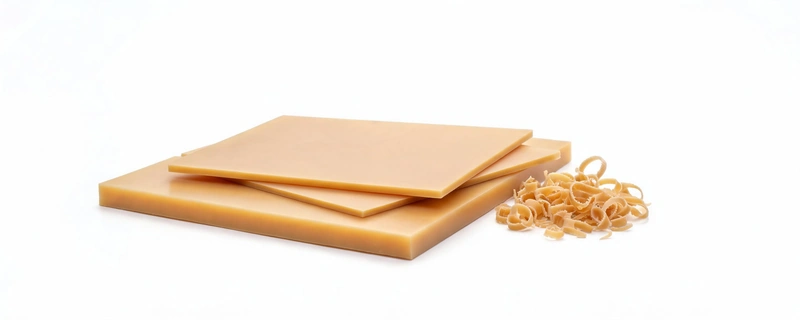
Polyurethane sheet stock for wear pads, protective liners, impact-resistant surfaces and sealing applications.
Read Guide →
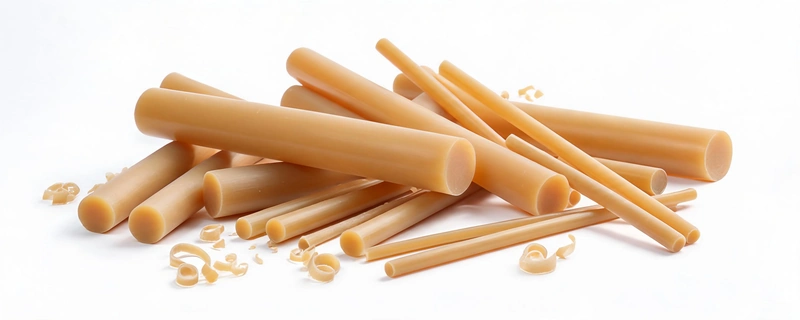
Round polyurethane stock for rollers, buffers, bushings and custom industrial components.
Read Guide →
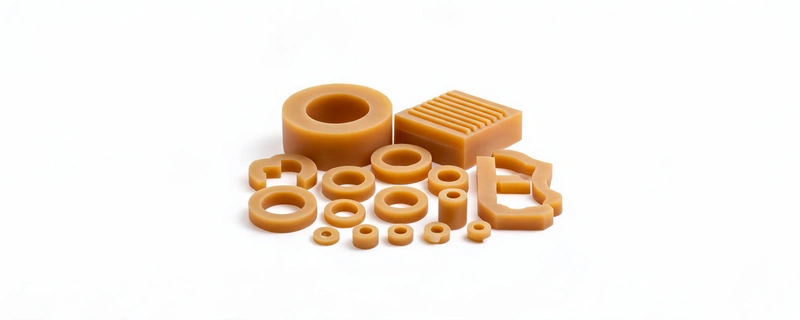
Custom polyurethane components manufactured to specified drawings, dimensions and application needs.
Read Guide →Polyurethane (PU) is a versatile polymer family formed through reactions involving polyols and isocyanates. Its properties can be adjusted over a wide range, from flexible elastomers to harder engineering materials.
Industrial polyurethane elastomers are valued for their combination of abrasion resistance, elasticity, impact absorption and load-bearing capability. They are commonly considered for components exposed to repeated contact, friction, vibration or mechanical impact.
The term PU covers different chemical systems and processing routes. Cast polyurethane elastomers and thermoplastic polyurethane (TPU), for example, should not be treated as interchangeable materials. Confirm the material type and grade before selecting stock or designing a component.
Polyurethane can provide a useful combination of wear resistance, resilience and mechanical flexibility.
| Property | General Characteristics | Selection Notes |
|---|---|---|
| Hardness | Available across a wide range of hardness levels | Specify Shore A or Shore D according to the material type and application. |
| Abrasion Resistance | Often very good in suitable elastomer grades | Compare test results under relevant wear conditions. |
| Elasticity | Can provide resilience and recovery after deformation | Depends on hardness, formulation, temperature and loading. |
| Impact Absorption | Useful for buffers and shock-absorbing components | Consider impact energy, geometry and operating temperature. |
| Tear Resistance | Can be strong in selected polyurethane elastomers | Check the grade-specific tear strength and test method. |
| Temperature Resistance | Varies considerably by PU chemistry and grade | Check continuous and short-term operating limits separately. |
Note: Polyurethane properties vary significantly with chemistry, hardness, formulation and manufacturing process. The table describes general material characteristics rather than guaranteed numerical specifications. Request the relevant technical data sheet for exact values.
Polyurethane elastomers are used in industrial components where wear, impact, flexibility or surface protection are important.
PU rollers and wheels can provide wear resistance, resilience and surface protection in material handling and conveying equipment.
Polyurethane wear pads and liners are considered for sliding contact, impact exposure and abrasion-prone equipment.
Selected PU grades are used in sealing components where elasticity, mechanical strength and abrasion resistance are required.
Elastic polyurethane components can absorb impact and reduce vibration in machinery and industrial handling systems.
Suitable PU formulations can be used in selected screens, scrapers, protective liners and wear components exposed to abrasive materials.
PU stock and custom components can be evaluated for special geometries, equipment maintenance and application-specific requirements.
Selecting polyurethane is not simply a matter of choosing a sheet or rod dimension. The hardness, chemical system, mechanical loading and operating environment all influence component performance.
For custom components, drawings, hardness requirements, operating conditions and expected quantities are useful starting points for material evaluation.
Common questions about polyurethane material forms, properties and industrial applications.
PU stands for polyurethane, a broad family of polymers with properties ranging from flexible elastomers to harder engineering materials. Industrial polyurethane elastomers are commonly selected for abrasion resistance, elasticity, impact absorption and mechanical performance.
TPU is thermoplastic polyurethane, a type of polyurethane that can be softened and processed through heat-based thermoplastic methods. Cast polyurethane elastomers are produced through a different chemical processing route. Their properties and manufacturing requirements can differ, so the exact material type should be confirmed.
Many polyurethane elastomer grades offer very good abrasion resistance, making them useful for rollers, wear pads, liners and other components exposed to repeated friction. Actual wear performance depends on hardness, formulation and operating conditions.
Polyurethane is available in a wide range of hardness levels. Softer elastomers are generally more flexible, while harder grades provide greater resistance to deformation. Specify the required Shore A or Shore D hardness when requesting material.
Suitable polyurethane sheet grades can be machined into custom shapes and components. The machining method and cutting conditions depend on hardness, elasticity, geometry and the stock material's properties.
PU rods can be used as stock for rollers, buffers, spacers, bushings and other custom industrial parts. The appropriate rod grade should be selected according to hardness, dimensions, mechanical loading and environmental conditions.
Chemical resistance varies with polyurethane chemistry and the fluid involved. Some grades are suitable for selected oil or industrial-fluid environments, while other chemicals may cause swelling or property changes. Always verify compatibility with the exact grade and exposure conditions.
Useful information includes the required product form, dimensions, hardness, material type if known, application, operating temperature, chemical exposure and estimated quantity. Drawings are helpful for custom CNC machined components.
Send Teda Plastics your required dimensions, hardness, application and quantity. Our team can review your polyurethane material requirements.
Request a Quote