PU (Polyurethane) sheet is a versatile elastomer stock material used in industrial applications requiring a combination of abrasion resistance, elasticity, impact absorption and mechanical strength. Depending on its formulation and hardness, polyurethane can be used for wear pads, protective liners, seals, buffers and other components exposed to repeated contact or friction.
Unlike conventional rigid engineering plastics, many polyurethane elastomers can deform under load and recover their shape after the load is removed. This combination of resilience and wear performance makes PU sheet useful in applications where both flexibility and durability are important.
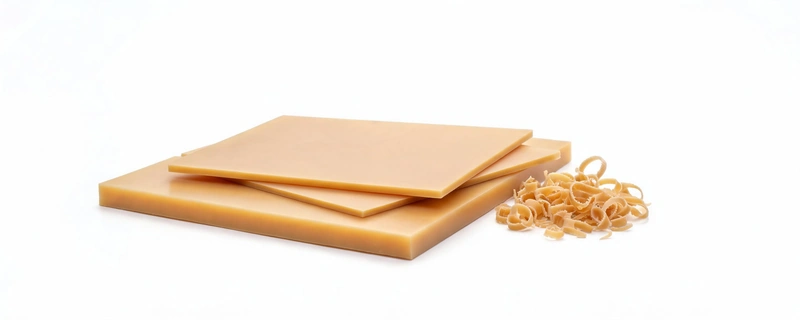
1. What Is PU Sheet?
PU sheet is a flat stock form made from polyurethane. Polyurethane is a broad polymer family whose properties can be adjusted through its chemical structure, formulation and manufacturing process.
Industrial polyurethane sheets are often produced as elastomeric materials. They are available in different hardness levels, colors, thicknesses and performance grades. Amber and light brown are common appearances, although color is not a reliable way to identify the material's exact chemistry or properties.
Depending on the product, polyurethane sheet may be manufactured through casting or other processing methods. Cast polyurethane elastomers and thermoplastic polyurethane (TPU) are different material systems and should not be assumed to have identical machining or service characteristics.
2. Key Properties of Polyurethane Sheet
Abrasion Resistance
Many polyurethane elastomer grades offer good resistance to abrasive wear. This makes them useful for liners, wear strips, scrapers and other parts exposed to sliding contact or repeated material movement. Actual wear performance depends on hardness, formulation, surface conditions and operating load.
Elasticity and Resilience
Polyurethane can combine flexibility with the ability to recover after deformation. This property is valuable in applications where components experience repeated compression, impact or movement.
Impact Absorption
Selected PU grades can absorb impact energy and reduce mechanical shock. They are therefore considered for buffers, protective pads and components used in material handling equipment.
Tear and Mechanical Strength
Polyurethane elastomers can provide useful tensile and tear strength. The actual values vary with hardness, chemistry, manufacturing route and test conditions. These properties should be checked for the selected grade rather than assumed for all PU sheets.
Hardness Options
PU sheet is available across a wide range of hardness levels. Softer grades provide greater flexibility, while harder grades generally offer greater resistance to indentation and deformation. Hardness should be specified using the appropriate Shore scale, such as Shore A or Shore D.
3. Typical Applications of PU Sheet
Wear Pads and Wear Strips
PU sheet can be cut or machined into wear pads and strips for industrial equipment. It is considered where sliding contact, repeated movement and surface protection are important.
Chute and Hopper Liners
Suitable polyurethane grades are used in selected mining, aggregate and material-handling applications. Liners can help protect equipment surfaces from impact and abrasive contact. The right grade depends on material size, impact energy, temperature and wear conditions.
Sealing Components
Polyurethane sheet can be converted into selected gaskets, sealing elements and protective components. Chemical compatibility, compression behavior and operating temperature should be evaluated before use in hydraulic or pneumatic systems.
Industrial Buffers and Impact Pads
Elastic PU sheet can be used to manufacture buffers and protective pads designed to absorb impact or reduce vibration in industrial equipment.
Machine Protection and Surface Protection
Polyurethane sheet can be used as a protective layer in selected machinery and handling systems where a resilient contact surface is required.
4. PU Sheet Hardness: Why It Matters
Hardness is one of the most important factors when selecting polyurethane sheet. It affects flexibility, indentation resistance, deformation and the way the material responds to contact pressure.
| Hardness Consideration | General Behavior | Possible Application |
|---|---|---|
| Softer PU grades | Greater flexibility and deformation under load | Impact pads and flexible protective components |
| Medium-hardness PU grades | Balance of elasticity and resistance to deformation | General wear components and protective liners |
| Harder PU grades | Greater resistance to indentation and dimensional deformation | Selected wear strips, support components and industrial parts |
This is a general selection guide, not a substitute for grade-specific data. Shore A and Shore D measurements are not directly interchangeable. The correct hardness depends on the contact pressure, impact level, geometry and required deformation behavior.
5. PU Sheet vs. Rubber and Rigid Plastics
Polyurethane is often evaluated alongside rubber and rigid engineering plastics. Each material family has different strengths, and the best choice depends on the actual service conditions.
| Material | General Characteristics | Selection Consideration |
|---|---|---|
| Polyurethane (PU) | Elasticity, abrasion resistance and impact absorption in suitable grades | Useful where resilient wear performance is required |
| Rubber | Flexible behavior and vibration or impact damping | Often considered for flexible seals, pads and vibration isolation |
| PTFE | Low friction and broad chemical resistance | Consider where sliding friction or chemical compatibility is a priority |
| PEEK | High stiffness and high-temperature engineering performance | Consider for demanding structural and thermal applications |
PU is not automatically more durable than every rubber or plastic. A meaningful comparison should use actual grade data and relevant wear, friction, impact and environmental test conditions.
6. Temperature and Chemical Compatibility
Polyurethane temperature capability varies with the chemistry and formulation. Some grades are designed for specific elevated-temperature environments, while others are intended for more moderate operating conditions. Continuous service temperature and short-term peak temperature should be evaluated separately.
Chemical resistance also varies. Exposure to oils, fuels, hydraulic fluids, solvents, cleaning agents and water can affect different polyurethane systems in different ways. Swelling, softening or deterioration may occur under unsuitable conditions.
7. Can PU Sheet Be CNC Machined?
Suitable polyurethane sheet grades can be cut and machined into custom components. However, machining elastomeric materials requires different considerations from machining rigid engineering plastics.
Use Sharp Cutting Tools
Sharp tools help reduce tearing, surface damage and excessive deformation. Tool geometry should be selected according to the hardness and elasticity of the PU stock.
Control Workholding Pressure
Excessive clamping force can compress or distort flexible PU sheet. Use suitable support and a holding method that keeps the workpiece stable without permanently deforming it.
Manage Heat and Cutting Conditions
Heat generated during machining can affect the material surface and dimensional behavior. Cutting speed, feed rate and tool condition should be adjusted according to the material grade and component geometry.
Inspect Dimensions After Release
Elastomeric materials may recover or change shape after clamping pressure is removed. Dimensional inspection should be carried out under a defined measurement condition, using suitable methods for the material's flexibility.
8. How to Select the Right PU Sheet
Before ordering polyurethane sheet, define the requirements of the finished component. The following information helps identify a suitable grade:
- Hardness: Specify Shore A or Shore D as appropriate.
- Dimensions: Provide required thickness, width and length.
- Application: Explain whether the sheet will be used for wear pads, liners, seals or impact components.
- Mechanical loading: Describe compression, sliding contact, impact and expected service life.
- Temperature: Provide normal operating temperature and short-term peaks.
- Chemical exposure: Identify oils, solvents, fluids or cleaning agents that contact the material.
- Manufacturing: Confirm whether the material will be cut, punched, bonded or CNC machined.
- Quantity: Provide the estimated requirement for quotation and production planning.
If the sheet will be machined into a custom component, a drawing with tolerances and installation details is also useful.
9. Frequently Asked Questions About PU Sheet
1. What is PU sheet used for?
PU sheet is used for wear pads, protective liners, wear strips, selected seals, buffers and impact-resistant components. Its suitability depends on the hardness, formulation and operating environment.
2. Is polyurethane sheet resistant to abrasion?
Many polyurethane elastomer grades offer good abrasion resistance. They are commonly considered for applications involving sliding contact and repeated wear. Actual performance depends on the grade, hardness, contact pressure and abrasive conditions.
3. What colors are available for PU sheet?
Amber and light brown are common appearances for some polyurethane sheet products. Other colors may also be available. Color alone does not establish the material's chemistry, hardness or performance grade.
4. What hardness options are available?
Polyurethane sheet is available in a wide range of hardness levels. The appropriate Shore A or Shore D value depends on the required flexibility, deformation resistance, impact behavior and contact conditions.
5. Can PU sheet be used for mining and chute liners?
Selected polyurethane grades are used in mining and material handling equipment for liners and wear components. Grade selection should account for impact energy, abrasive material, temperature and the mechanical design of the equipment.
6. What is the temperature resistance of PU sheet?
Temperature resistance varies significantly with polyurethane chemistry and formulation. Check the manufacturer's data for continuous service conditions and short-term temperature exposure rather than relying on one general temperature limit.
7. Can PU sheet be CNC machined?
Yes, suitable PU sheet grades can be machined into custom components. Sharp tools, suitable workholding, controlled cutting conditions and careful dimensional inspection are important because elastomeric materials can deform during machining.
8. What information should I provide when requesting a PU sheet quotation?
Provide the required thickness, width, length, hardness, application, operating temperature, chemical exposure and estimated quantity. For machined components, include a technical drawing with dimensions and tolerances.
Looking for PU Sheet?
Contact Teda Plastics with your required dimensions, hardness, application and quantity. You can also send a drawing if you need custom polyurethane components.
Request a Quote