PI granules, also known as polyimide pellets, are specialized feedstock materials used in certain polyimide molding and manufacturing processes. Unlike standard engineering plastics, polyimide materials cover several different chemical structures and processing technologies. Therefore, the suitable production method depends on the specific PI grade.
For engineers and industrial buyers, understanding the difference between thermoplastic PI, thermosetting or non-melt-processable PI systems, and PI powder is important before choosing a material for production.
1. What Are PI Granules?
PI stands for Polyimide, a family of high-performance polymers known for their thermal stability, mechanical performance and electrical insulation properties in many applications.
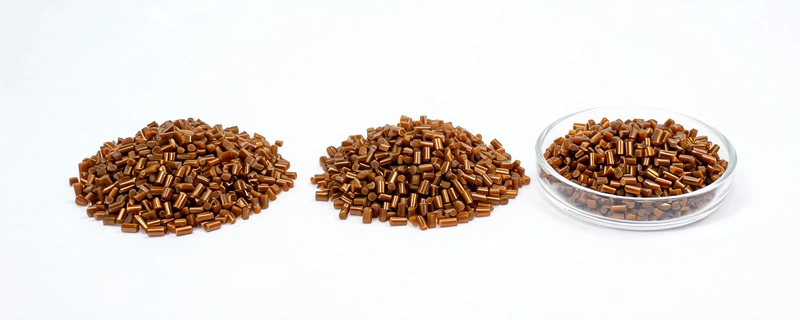
PI granules are small, pellet-shaped or granular forms of polyimide material. They are supplied as feedstock for particular manufacturing processes, depending on the polymer chemistry and material formulation.
It is important to understand that not every PI material can be processed like ordinary thermoplastic pellets. Some polyimide grades are designed for melt processing, while many conventional PI materials require powder-based forming, compression, curing or other specialized routes.
2. Main Types of PI Granules and Feedstock
Thermoplastic Polyimide
Certain thermoplastic polyimide grades are designed to soften and flow at elevated temperatures. Depending on the grade, they may be suitable for melt-processing techniques such as injection molding or extrusion.
These materials require specialized processing equipment and carefully controlled temperature conditions. Processing recommendations must always follow the manufacturer's technical documentation.
Specialty PI Molding Feedstock
Other polyimide systems are supplied in granular, powder or precursor forms for specialized forming processes. Their manufacturing routes may involve compaction, thermal treatment, curing or consolidation.
These materials should not automatically be treated as conventional injection-molding pellets. The correct process depends on the chemical formulation and supplier's instructions.
PI Powder
PI powder is another important form of polyimide feedstock. It may be used in specialized molding, coatings, composites and other applications. Particle size, particle-size distribution and formulation can affect handling and processing behavior.
If your process requires powder rather than pellets, see our PI Powder Guide.
3. Where Are PI Granules Used?
The applications of PI granules depend on the grade and the manufacturing technology. Suitable materials may be considered for components that require a combination of thermal performance, mechanical properties and electrical insulation.
- Electrical and electronic components: Selected insulating components and precision parts used in demanding electrical environments.
- Industrial machinery: Specialized components exposed to elevated temperatures or demanding operating conditions.
- Automotive and transportation: Selected high-temperature components where the material grade meets the required service conditions.
- Aerospace and advanced engineering: Specialized applications requiring carefully qualified high-performance polymer materials.
- Precision molded components: Parts for which a suitable PI molding grade and production process are available.
Application suitability should be verified against the actual operating temperature, mechanical load, chemical exposure, electrical requirements and dimensional tolerances.
4. Key Characteristics of PI Materials
Polyimide is a high-performance polymer family. Its properties vary considerably according to chemical structure, formulation, reinforcement and manufacturing process.
- Thermal performance: Many PI grades are designed for demanding high-temperature environments.
- Mechanical properties: Depending on the grade, PI can provide high strength, stiffness and dimensional stability.
- Electrical insulation: Many PI formulations are used in electrical and electronic insulation applications.
- Wear performance: Selected PI grades are suitable for applications involving friction and mechanical contact.
- Chemical resistance: Resistance depends on the specific chemical, temperature, exposure time and PI formulation.
5. PI Granules vs. PI Powder vs. PI Rod
PI is available in different forms for different manufacturing requirements. The right form depends on the production process, component geometry, order quantity and material grade.
| Material Form | Typical Purpose | Key Consideration |
|---|---|---|
| PI Granules | Specialized molding or other grade-specific processing routes | Confirm pellet formulation and compatible equipment |
| PI Powder | Powder-based molding, coatings and compounding | Particle size and processing characteristics are important |
| PI Rod | CNC machining of precision components | Suitable for shafts, bushings and custom parts |
| PI Sheet | Machined plates, insulation parts and structural components | Thickness, flatness and dimensional requirements matter |
If your project involves machining rather than molding, PI rods and sheets may be more practical starting materials.
Read our PI Rod Guide to learn more about PI stock shapes and machining applications.
6. Processing Considerations
PI processing is more specialized than the processing of common engineering plastics such as POM, PA or PET. The correct method depends on the grade's molecular structure and whether it is designed for melt processing.
Temperature Control
PI processing temperatures can vary significantly between material families. Some thermoplastic PI grades require high melt-processing temperatures, while other PI systems use different thermal consolidation or curing processes.
Do not apply one universal processing temperature to all PI granules. Follow the specific supplier's processing guidelines.
Moisture and Material Handling
Moisture control should be considered where required by the material supplier. Some formulations and processing routes may be sensitive to moisture, which can affect processing stability or final component quality.
Keep materials in suitable sealed packaging and follow the recommended storage and pre-processing instructions for the specific grade.
Equipment Compatibility
High-temperature PI processing may require specialized machinery, temperature-control systems and tooling. Before production, confirm that the equipment is compatible with the material's processing window and requirements.
7. How to Select the Right PI Granules
Before placing an order, buyers should clarify several technical and commercial details. This helps avoid selecting a material that is unsuitable for the intended production process.
- Material grade: Identify the exact PI type and formulation.
- Processing method: Confirm whether the material is intended for injection molding, compression molding, compounding or another process.
- Technical requirements: Define operating temperature, mechanical properties, electrical requirements and chemical exposure.
- Physical specifications: Check pellet dimensions, particle characteristics and packaging requirements where applicable.
- Documentation: Request the technical datasheet and relevant processing recommendations.
- Supply requirements: Confirm available quantity, packaging, lead time and export arrangements.
8. When Should You Choose PI Granules?
PI granules may be a suitable option when a specific polyimide grade is available for your production process and your equipment can meet its processing requirements.
However, granules are not automatically the best choice for every PI component. For low-volume production, complex prototypes or precision parts, machining from PI rods or sheets may be more practical.
Consider the following before making a decision:
- Is the selected PI grade compatible with your manufacturing process?
- Can your equipment achieve the required processing conditions?
- Is the production volume sufficient to justify the molding process?
- Would machining from PI stock shapes provide a more flexible solution?
Frequently Asked Questions About PI Granules
1. What are PI granules used for?
PI granules are used as feedstock for specialized polyimide manufacturing processes. Depending on the grade, applications may include molded industrial, electrical and precision engineering components.
2. Can all PI granules be injection molded?
No. Only PI grades specifically designed for melt processing are suitable for injection molding. Many conventional polyimide materials require powder-based forming, compression or other specialized manufacturing processes.
3. What is the difference between PI granules and PI powder?
PI granules are generally pellet-shaped feedstock, while PI powder consists of finer particles. Their intended processing methods can differ, so the correct form should be selected according to the material grade and production process.
4. Do PI granules require drying before processing?
Drying requirements depend on the specific PI grade and its processing instructions. Follow the supplier's recommendations for storage, moisture control and pre-drying rather than applying one drying condition to every PI material.
5. Are PI granules suitable for high-temperature applications?
Many PI materials are developed for demanding thermal environments. However, the actual service temperature depends on the grade, mechanical load, exposure time and operating environment. Check the technical datasheet before selection.
6. Are PI granules better than PI rods for manufacturing?
Neither form is universally better. Granules may be appropriate for a compatible molding process, especially when production volume justifies tooling. PI rods are often more practical for CNC-machined shafts, bushings and customized precision components.
7. What information should I provide when requesting a PI granules quotation?
Provide the required PI grade, intended application, processing method, estimated quantity and any required technical specifications. If you have a datasheet or material reference, include it with your inquiry.
8. Can Teda Plastics help with PI material selection?
Yes. Contact Teda Plastics with your application details and material requirements. We can discuss available PI material forms and help you identify the information needed for grade selection.
Looking for PI Granules or Other Polyimide Materials?
Teda Plastics supplies high-performance engineering plastic materials in different forms, including PI powder, granules, sheets, rods and customized machined components.
Tell us about your application, required specifications and estimated quantity. Our team will help you discuss a suitable material solution.
Contact Teda Plastics