What Is PI Rod?
PI rod is a cylindrical semi-finished product made from polyimide, a high-performance polymer used in selected applications requiring thermal stability, mechanical performance and electrical insulation. It can be machined into precision components such as bushings, spacers, sleeves, rollers and custom industrial parts.
Unlike ordinary plastic round bars, PI rods are generally selected for more demanding operating conditions. However, polyimide is a family of materials rather than one single grade. Different formulations and manufacturing processes can produce different mechanical, thermal and electrical properties.
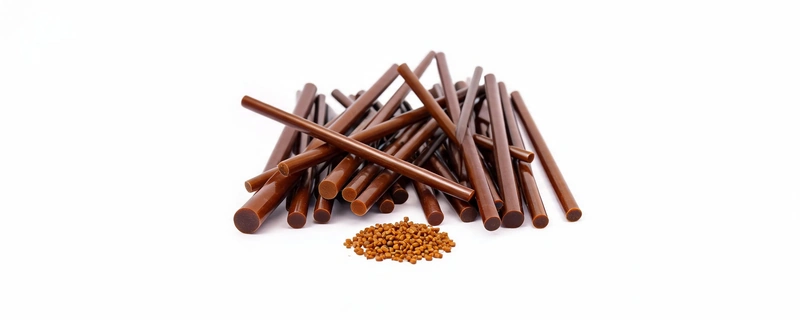
Key Characteristics of PI Round Rod
1. Thermal Stability
Many PI materials are designed for use in elevated-temperature environments. Their thermal capability makes them candidates for specialized industrial components where conventional plastics may not be suitable.
The usable temperature depends on the exact grade, applied load, exposure duration, surrounding atmosphere and component design. Short-term temperature resistance should not be confused with continuous service capability.
2. Mechanical Strength and Stiffness
Selected PI grades offer useful mechanical strength and stiffness. These properties can be important for machined components that need to maintain their shape under mechanical stress or elevated operating temperatures.
Actual tensile strength, compressive strength, flexural properties and modulus vary by formulation and manufacturing route. Always refer to the technical datasheet for the specific rod grade.
3. Electrical Insulation
Many PI formulations provide electrical insulation properties and are used in electrical equipment and specialized industrial assemblies. Dielectric strength and resistivity should be checked against the requirements of the actual application.
4. Wear and Friction Considerations
PI can be considered for selected wear-related components, but friction and wear performance are not identical across all PI grades. Counterface material, surface finish, contact pressure, speed, temperature and lubrication can significantly influence service life.
5. Precision Machining Potential
PI rod stock can be machined into complex geometries. Dimensional accuracy depends on material grade, stock condition, part geometry, cutting conditions, workholding and inspection methods.
Important: Do not assume that all PI rods share the same temperature limit, wear behavior or mechanical values. Request grade-specific technical information before making a final material decision.
Common Applications of PI Rod
Bushings and Sleeves
PI round rods can be machined into bushings and sleeves for selected industrial assemblies. Material selection should consider load, sliding speed, mating surface, temperature and lubrication conditions.
Spacers and Insulating Components
PI is used in some electrical and mechanical systems to manufacture spacers, supports and insulating components. The selected grade should meet the required electrical, thermal and dimensional specifications.
Precision Machine Components
Custom PI rod machining can produce shafts, pins, guides and other precision components for specialized equipment. The design should account for the material's machining behavior and operating environment.
High-Temperature Industrial Equipment
Selected PI grades are considered for components exposed to elevated temperatures. Before specifying PI, engineers should evaluate the actual service temperature, mechanical loading, thermal cycling and environmental exposure.
PI Rod Sizes and Dimensions
PI round rods are supplied in different diameters and lengths depending on the grade, manufacturing method and available stock. The actual size range should be confirmed with the supplier.
When requesting PI rod stock, specify the following information:
- Required diameter and length.
- Material grade or performance specification, if known.
- Quantity and expected purchasing frequency.
- Required dimensional tolerances.
- Intended operating temperature and application.
- Whether the material will be machined into finished components.
For non-standard dimensions or custom parts, a technical drawing can help clarify the required geometry and machining allowances.
PI Rod vs. PEEK Rod vs. PAI Rod
PI, PEEK and PAI are all high-performance engineering plastics, but they are not interchangeable. Their processing methods, mechanical behavior and application advantages differ.
| Comparison | PI Rod | PEEK Rod | PAI Rod |
|---|---|---|---|
| Material family | Polyimide | Polyetheretherketone | Polyamide-imide |
| Thermal capability | Selected grades offer very high thermal capability | High thermal capability for a thermoplastic | Selected grades offer high thermal capability |
| Processing characteristics | Many machinable stock shapes are not melt-processable like standard thermoplastics | Thermoplastic processing is possible with suitable equipment | Grade-dependent; often supplied as machinable stock shapes |
| Mechanical behavior | Grade-dependent strength and stiffness | Good combination of strength and toughness in suitable grades | Selected grades offer high strength and stiffness |
| Typical selection focus | Specialized thermal and precision requirements | Strength, chemical resistance and thermoplastic processing | Wear, stiffness and demanding mechanical applications |
This is a general comparison, not a substitute for grade-specific data. Engineers should compare actual datasheets and evaluate the component under its intended operating conditions.
CNC Machining of PI Rod
PI round rods can be machined into custom parts using turning, milling, drilling and other suitable machining operations. Since PI grades and stock conditions can differ, machining parameters should be developed for the actual material.
Turning and Diameter Control
When turning PI rod, use sharp tools and stable workholding. Cutting forces, tool condition and heat generation can affect surface finish and final diameter. For long or slender components, support and workpiece rigidity are particularly important.
Drilling and Internal Features
Deep holes and small internal features require attention to chip evacuation, tool geometry and heat management. Drilling strategy should be selected according to hole depth, diameter and the specific PI grade.
Machining Stress and Part Geometry
Thin walls, narrow sections and asymmetric designs can be sensitive to machining stress and workholding pressure. A suitable machining sequence and adequate support can help reduce deformation and dimensional variation.
Surface Finish and Inspection
Surface finish requirements should be specified according to the component's function. For precision parts, define measurement conditions and inspect critical dimensions after machining and stabilization where appropriate.
Machining tip: If a PI component requires tight tolerances, provide the drawing before production. Diameter, length, concentricity, straightness and surface finish may require different process controls.
How to Choose the Right PI Rod
Choosing a PI rod based only on diameter or price can lead to problems during machining or service. A better selection process begins with the component's actual operating requirements.
- Operating temperature: Define normal and peak temperatures and exposure duration.
- Mechanical load: Identify compression, bending, tension or contact loading.
- Movement and friction: Specify sliding speed, contact pressure and lubrication.
- Electrical requirements: Confirm insulation or dielectric performance if required.
- Environment: Identify chemicals, moisture, dust and other exposure conditions.
- Dimensions: Confirm diameter, length, tolerances and machining allowance.
- Quantity: State the required quantity and delivery schedule.
PI Rod Supply from Teda Plastics
Teda Plastics Co., Ltd. supplies engineering plastic materials for industrial customers and international buyers. We welcome inquiries for PI polyimide rod stock and other high-performance plastic materials.
For a PI rod inquiry, please send the required diameter, length, quantity and material specification if available. If you need custom-machined components, you can also provide a technical drawing for review.
Material grade, stock availability, dimensions and machining options should be confirmed according to the specific project requirements.
Need PI Rod or Custom-Machined PI Components?
Send us your required dimensions, material specification or technical drawing. Our team can review your inquiry and discuss suitable material options.
Frequently Asked Questions About PI Rod
1. What is PI rod used for?
PI rod is used to manufacture selected high-performance engineering components, including bushings, sleeves, spacers, pins, guides and electrical insulation parts. Its suitability depends on the material grade and the operating conditions of the finished component.
2. Can PI rod withstand high temperatures?
Many PI grades are designed for elevated-temperature applications. However, the usable temperature varies with formulation, load, exposure duration and environment. Always confirm the continuous service temperature of the exact grade rather than relying on a general PI temperature figure.
3. Can PI round rods be CNC machined?
Yes. PI rod stock can be machined by turning, milling, drilling and other suitable processes. Tool sharpness, cutting heat, workholding and part geometry should be considered to achieve the required dimensions and surface quality.
4. What is the difference between PI rod and PI sheet?
PI rod is a cylindrical stock shape commonly used to produce round components such as bushings, sleeves and pins. PI sheet is a flat stock shape used for plates, spacers, insulation parts and other flat or block-shaped components. The material grade may be similar, but the product form and machining approach differ.
5. Is PI rod better than PEEK rod?
Not necessarily. PI and PEEK have different thermal, mechanical and processing characteristics. Some PI grades are selected for specialized thermal requirements, while PEEK offers a useful combination of strength, chemical resistance and thermoplastic processing options. The best choice depends on the application and the specific grades being compared.
6. Is PI rod suitable for bushings and wear parts?
Selected PI grades may be suitable for certain bushings and wear-related components. However, friction and wear depend on contact pressure, sliding speed, counterface material, surface finish, temperature and lubrication. Application-specific testing or grade data should be reviewed before final selection.
7. What PI rod diameters are available?
Available diameters and lengths depend on the grade, production process and stock range. Please provide your required diameter, length and quantity so the supplier can check the available options or discuss a suitable solution.
8. What information is needed for a PI rod quotation?
Please provide the required diameter, length, quantity, material grade if known and intended application. For machined parts, include a technical drawing with critical dimensions, tolerances and surface-finish requirements.