What Is PTFE Rod?
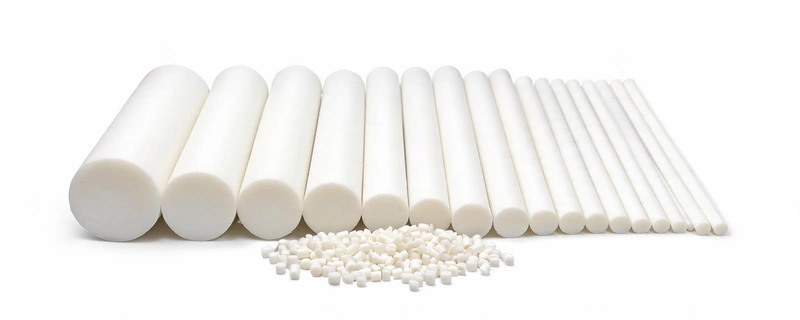
PTFE (Polytetrafluoroethylene) rod is a cylindrical semi-finished engineering plastic material valued for its excellent chemical resistance, low friction and wide operating temperature range.
Unlike PTFE sheet, round rod stock is commonly used to machine cylindrical components such as seals, bushings, valve seats, spacers and electrical insulating parts.
How Is PTFE Rod Manufactured?
PTFE rod is commonly manufactured through compression molding or paste extrusion, depending on the product form, grade and dimensions.
Compression Molding
PTFE powder is compacted in a mold to form a preform. The material is then sintered under controlled conditions. The resulting stock can be supplied in different shapes and machined into finished components.
Paste Extrusion
Fine PTFE powder is mixed with a suitable processing aid and extruded through specialized equipment. This process is commonly associated with PTFE tubing and other extruded products.
Manufacturing method, material grade, dimensions and internal stress can all affect machining performance. Neither manufacturing method is universally more precise; dimensional quality depends on process control and product specifications.
Virgin PTFE Rod vs. Filled PTFE Rod
Virgin and filled PTFE rods are designed for different operating requirements. Adding fillers can improve selected properties, but may also affect chemical resistance, electrical behavior and other characteristics.
Virgin PTFE
Virgin PTFE contains no intentionally added reinforcing fillers. It offers excellent chemical resistance, low friction and strong electrical insulation properties. It is commonly used in chemical processing, electrical components and applications requiring high material purity.
Glass-Filled PTFE
Glass fiber reinforcement can improve stiffness, dimensional stability and resistance to creep and wear under suitable operating conditions. Chemical compatibility should be evaluated for the actual application.
Carbon or Graphite-Filled PTFE
Carbon- and graphite-filled grades are used to modify wear behavior, thermal conductivity and mechanical performance. Their suitability depends on the filler type, percentage and operating environment.
Bronze-Filled PTFE
Bronze-filled grades are commonly selected where improved load-bearing behavior, wear performance and thermal conductivity are required. They are not suitable for every chemical environment.
Material selection note: Filled PTFE grades are not automatically better than virgin PTFE. Consider the working medium, temperature, load, sliding speed, counterface and electrical requirements before choosing a grade.
PTFE Rod Properties
The following information describes general characteristics of unfilled virgin PTFE. Actual values vary by grade, manufacturing process, specimen preparation and test method. Always refer to the supplier's technical data sheet for confirmed specifications.
| Property | General Reference | Technical Considerations |
|---|---|---|
| Continuous Service Temperature | Up to approximately 260°C | Depends on load, environment and application design. |
| Chemical Resistance | Excellent | Some highly reactive substances and conditions require special evaluation. |
| Coefficient of Friction | Very low | Depends on load, speed, surface finish and counterface. |
| Tensile Strength | Typically around 25–35 MPa | Reference range only; verify the grade and test method. |
| Electrical Properties | Excellent insulating characteristics | Filled grades may have different electrical behavior. |
| Creep Resistance | Relatively low | Long-term deformation under load must be considered. |
PTFE Rod Sizes and Dimensions
PTFE round rods are available in different diameters and lengths for machining and industrial applications. The available dimensional range depends on the manufacturing method, grade and supplier's production capabilities.
When requesting a quotation, specify:
- Required diameter and length.
- Metric or inch dimensions.
- Virgin or filled PTFE grade.
- Filler type and percentage, if applicable.
- Required dimensional tolerances.
- Quantity and intended application.
If you need a diameter outside standard stock dimensions, provide your requirements so that availability can be checked.
Common Applications of PTFE Rod
Seals and Gaskets
PTFE rods can be machined into sealing components for applications requiring chemical resistance and low friction. The final design should consider pressure, temperature, clearance and possible deformation.
Valve Seats and Pump Components
PTFE is used in selected valve and pump components where chemical compatibility and low friction are important. Grade selection depends on the process medium and mechanical loading.
Bushings and Sliding Components
PTFE and selected filled PTFE grades can be used in sliding applications. Load, speed, heat generation, wear rate and counterface material should be evaluated.
Electrical Insulation
Virgin PTFE rod is used in electrical insulating components because of its favorable dielectric properties and chemical resistance.
PTFE Rod CNC Machining Guide
Machining PTFE requires careful process control because the material is relatively soft, flexible and subject to thermal expansion and deformation.
Tool Selection
Sharp cutting tools with suitable geometry can help produce clean surfaces and reduce cutting forces. Tool material, edge condition and cutting geometry should be selected according to the machining operation and PTFE grade.
Workholding and Clamping
Excessive clamping force may deform PTFE rod stock. Use appropriate support and controlled clamping pressure. Long or slender workpieces may require additional support to reduce vibration and deflection.
Cooling and Chip Removal
Cooling and chip-removal methods depend on the operation, tooling, component geometry and cleanliness requirements. Compressed air may be suitable for some operations. Coolant can also be considered where appropriate for the machining setup and subsequent cleaning requirements.
Internal Stress and Thermal Expansion
PTFE can expand significantly with temperature changes. Residual stress from manufacturing and machining may contribute to dimensional changes after material removal. For demanding components, machining sequence, stress management and inspection conditions should be planned before production.
PTFE Rod Machining Tolerances
Achievable tolerances depend on the rod grade, diameter, part geometry, material flexibility, thermal expansion, internal stress and machining setup.
For accurate inspection, the part should be stabilized at a defined reference temperature before measurement. Measurement equipment and inspection procedures should also be appropriate for the relatively soft material.
Tighter tolerances may require additional machining stages, controlled workholding and inspection. A specific tolerance should be evaluated against the actual drawing rather than assumed to be achievable for every PTFE component.
PTFE Rod vs. PEEK Rod vs. POM Rod
PTFE, PEEK and POM each offer different combinations of chemical resistance, mechanical strength, temperature performance and friction behavior.
| Property | PTFE Rod | PEEK Rod | POM Rod |
|---|---|---|---|
| Chemical Resistance | Excellent | Very good | Moderate |
| Temperature Capability | High | High | Moderate |
| Mechanical Strength | Relatively low | High | Good |
| Friction Behavior | Very low friction | Grade dependent | Good sliding behavior |
| Creep Resistance | Relatively low | Generally high | Moderate to good |
| Typical Selection Priority | Chemical resistance and low friction | Strength and high-temperature performance | General engineering applications |
These are general material comparisons, not guaranteed grade specifications. Actual performance depends on material formulation, operating conditions and component design.
How to Select the Right PTFE Rod
Before purchasing PTFE rod, engineers and buyers should evaluate the complete operating environment rather than selecting material based on price alone.
- Material grade: Virgin, glass-filled, carbon-filled, graphite-filled or bronze-filled PTFE.
- Dimensions: Required diameter, length and dimensional tolerances.
- Operating temperature: Normal and peak service temperatures.
- Chemical exposure: Type of chemical, concentration and exposure duration.
- Mechanical loading: Static load, dynamic load, pressure and sliding speed.
- Electrical requirements: Insulation or conductivity requirements.
- Manufacturing needs: CNC machining, finished components or raw material supply.
Frequently Asked Questions
PTFE Rod Supplier – Teda Plastics
Teda Plastics Co., Ltd. supplies virgin and filled PTFE materials for industrial customers. We support inquiries for PTFE rods and other engineering plastic stock shapes.
Whether you need virgin PTFE for chemical resistance, filled PTFE for selected wear applications or rod stock for CNC machining, please share your required dimensions and application details.
Our team can review your requirements and discuss suitable material options, specifications and quotation details.
Looking for PTFE Rod?
Send us your dimensions, material grade or technical drawing. Our team will review your requirements and provide quotation support.
Request a Quote WhatsApp Us