What Is PTFE Sheet?
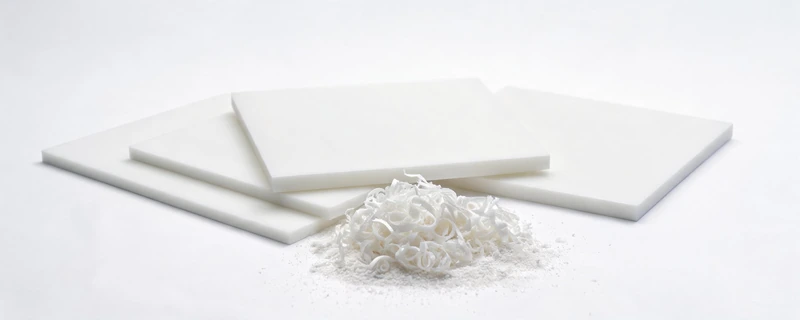
PTFE (Polytetrafluoroethylene) sheet is a high-performance fluoropolymer semi-finished material known for its excellent chemical resistance, low coefficient of friction and wide operating temperature range.
Compared with PTFE rod, which is commonly used for cylindrical components such as bushings and seals, PTFE sheet is especially suitable for flat parts, including gaskets, liners, insulation components and machined plates.
How Is PTFE Sheet Manufactured?
PTFE cannot be processed in the same way as conventional melt-processable thermoplastics. Its high melt viscosity means that specialized forming methods are used to produce sheet stock.
Common manufacturing and processing methods include:
- Compression Molding: PTFE powder is compressed in a mold and then sintered under controlled conditions. The resulting molded material can be machined into sheets and plates.
- Skiving: A molded PTFE billet is cut into thin continuous sheets using a specialized blade. Skived PTFE is commonly used for thinner sheet products and film-like applications.
- Machining from Molded Stock: Thicker PTFE plates and custom blanks can be produced by machining molded billets to the required dimensions.
Virgin PTFE vs. Filled PTFE Sheet
Virgin and filled PTFE sheets are designed for different operating conditions. The correct grade depends on chemical exposure, mechanical loading, wear requirements and dimensional stability.
Virgin PTFE Sheet
Virgin PTFE is made without reinforcing fillers. It offers excellent chemical resistance, low friction and strong electrical insulation properties. It is commonly selected for chemical processing equipment, electrical components and general-purpose sealing applications.
Glass-Filled PTFE Sheet
Glass fiber can improve stiffness, wear resistance and resistance to deformation under load. Glass-filled grades are often considered for applications where improved dimensional stability is required. Their compatibility with the working medium should be checked carefully.
Carbon / Graphite-Filled PTFE Sheet
Carbon and graphite fillers can improve wear behavior, stiffness and thermal conductivity. These grades may be considered for sliding components and applications involving friction or mechanical loading.
Bronze-Filled PTFE Sheet
Bronze-filled PTFE is commonly used in certain wear and load-bearing applications. It can provide improved compressive and thermal properties compared with virgin PTFE, but its chemical compatibility is more limited than unfilled PTFE in some environments.
Technical Properties of PTFE Sheet
The following table provides general reference information for unfilled virgin PTFE. These are not guaranteed specifications for every product. Actual values vary with material grade, processing method, specimen preparation and test conditions.
| Property | Typical Reference | Notes |
|---|---|---|
| Continuous Service Temperature | Approximately -200°C to +260°C | Depends on grade and operating conditions |
| Coefficient of Friction | Very Low | Depends on load, speed and counterface |
| Tensile Strength | Approximately 25–35 MPa | Indicative range; test method and grade matter |
| Electrical Insulation | Excellent | Dielectric properties depend on thickness and test conditions |
| Chemical Resistance | Excellent | Some exceptional reactive substances require special evaluation |
| Water Absorption | Very Low | Exact values depend on test method |
For engineering design, always use the technical data sheet for the specific PTFE grade rather than relying only on general material reference values.
PTFE Sheet Thickness and Available Sizes
PTFE sheet is available in different thicknesses for applications ranging from thin insulation parts to thick machined components. Common thickness options may include approximately 0.5 mm to 50 mm and above, depending on the manufacturing process and supplier availability.
Sheet dimensions, thickness tolerances and flatness requirements should be confirmed before ordering. Standard dimensions may vary between manufacturers. Custom dimensions can also be discussed according to the intended application.
When selecting sheet thickness, consider the following:
- Required final component thickness.
- Machining allowance and material removal.
- Flatness and dimensional tolerance requirements.
- Mechanical loading and sealing conditions.
- Material utilization and production cost.
PTFE Sheet for Gaskets and Sealing Applications
PTFE sheet is widely used to manufacture gaskets and sealing components because of its chemical resistance and ability to operate across a broad temperature range.
Typical applications include:
- Chemical processing equipment and pipeline flanges.
- Pump and valve sealing components.
- Industrial tanks and vessel linings.
- Corrosive fluid handling systems.
- Electrical insulation and protective components.
However, PTFE is susceptible to creep and cold flow. Gasket performance depends on more than chemical resistance. Pressure, temperature, flange surface finish, bolt loading, gasket dimensions and operating cycles must all be considered.
Understanding PTFE Cold Flow and Creep
One important limitation of PTFE is its tendency to deform gradually under sustained mechanical stress. This behavior is commonly described as creep or cold flow.
In gasket applications, continuous compression may cause the material to change shape over time, potentially affecting sealing performance and bolt load retention.
Filled PTFE grades can improve certain mechanical characteristics, including resistance to deformation. However, no filler automatically makes a PTFE grade suitable for every high-pressure sealing application.
Material selection should be based on the actual operating conditions and relevant gasket design requirements. For more information, see our PTFE Cold Flow Guide .
PTFE Sheet vs. PEEK Sheet
PTFE and PEEK are both high-performance engineering plastics, but they serve different purposes.
| Feature | PTFE Sheet | PEEK Sheet |
|---|---|---|
| Chemical Resistance | Excellent | Very Good |
| Friction | Extremely Low | Low |
| Mechanical Strength | Relatively Low | High |
| Creep Resistance | Relatively Low | Generally Higher |
| Typical Applications | Gaskets, liners, insulation | Structural parts, precision components |
PTFE is often preferred when chemical resistance and extremely low friction are the main priorities. PEEK is generally considered when higher mechanical strength, stiffness and dimensional stability are required.
The final choice depends on the actual operating temperature, mechanical load, chemical environment and component design.
Explore our PEEK material range for more information.
PTFE Sheet Machining and Fabrication
PTFE sheet can be cut, drilled, punched and CNC machined into custom components. It is relatively soft compared with many engineering plastics, so machining requires suitable tooling and workholding methods.
Important machining considerations include:
- Sharp Cutting Tools: Suitable sharp tools help reduce material deformation and improve cutting quality.
- Workholding: Excessive clamping pressure can deform the material and affect dimensional accuracy.
- Thermal Effects: PTFE has a relatively high coefficient of thermal expansion. Temperature changes during machining and inspection can influence measured dimensions.
- Dimensional Stability: Internal stress, material thickness and machining sequence should be considered when producing precision components.
- Inspection: Critical dimensions should be checked under controlled and consistent measurement conditions.
For custom components, you can also learn more about our CNC machining services .
How to Select the Right PTFE Sheet
Selecting the right PTFE sheet requires more than specifying the material name. The grade and dimensions should match the actual working conditions.
When requesting a quotation, please provide:
- Material type: virgin PTFE or filled PTFE.
- Filler type and percentage, if applicable.
- Required thickness, length and width.
- Operating temperature and chemical environment.
- Mechanical loading and sealing requirements.
- Required machining or finished component dimensions.
- Quantity and any special documentation requirements.
Drawings, application details and technical specifications help us evaluate your requirements more accurately.
Frequently Asked Questions
PTFE Sheet Supplier – Teda Plastics
Teda Plastics Co., Ltd. supplies virgin and filled PTFE materials for industrial applications. Our product range includes PTFE sheets, rods, powders, granules and customized machined components.
We support overseas buyers, distributors and engineering companies with material information and quotation assistance. Please send us your required dimensions, material grade or technical drawing for evaluation.
Looking for a Reliable PTFE Sheet Supplier?
Send us your specifications, dimensions or drawings. Our team will help you check the suitable PTFE material and quotation requirements.
Request a Quote WhatsApp Us