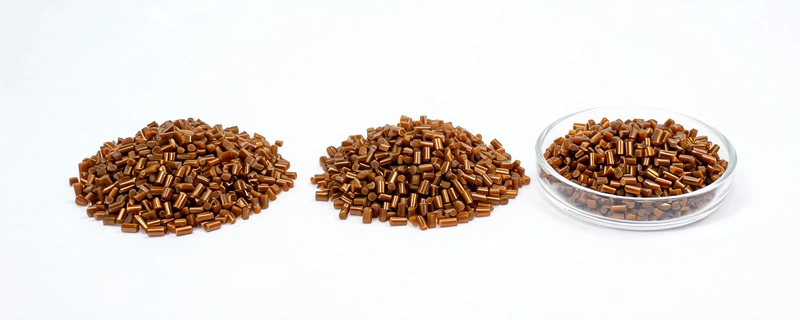
PI granules are pellet-shaped polyimide materials supplied for specific industrial processing applications. Polyimide (PI) is known for its excellent thermal stability, mechanical performance and electrical properties. However, PI is a broad family of materials, and not every PI formulation can be processed through conventional thermoplastic injection molding.
1. What Are PI Granules?
PI, short for polyimide, is a high-performance polymer family used in applications where ordinary engineering plastics may not provide sufficient thermal, mechanical or electrical performance.
PI granules are supplied in pellet form for selected processing systems. Their composition, molecular structure, pellet dimensions and processing behavior depend on the specific resin formulation and manufacturing route.
It is important to distinguish PI granules from conventional PI powder, machinable PI sheets and rods, and PI films. These material forms serve different manufacturing purposes and should not be treated as interchangeable.
2. Different Types of PI Granules
The term PI granules does not describe one universal material grade. Different formulations may be designed for different processing routes and end-use requirements.
Specialty Thermoplastic PI Grades
Certain polyimide-based formulations are designed to soften or flow under specific processing conditions. Where the supplier confirms melt processability, these materials may be considered for specialized molding or extrusion applications.
Compounding and Modified PI Materials
Some pellet-shaped PI-based materials are supplied for compounding or specialized formulation work. Fillers and additives may be used to adjust stiffness, wear behavior, thermal expansion or other properties.
Other PI-Based Pellet Forms
Some products described commercially as PI pellets may be intermediate materials or feedstock for a specific manufacturing process. Their intended use must be confirmed with the supplier before purchasing.
3. Where Are PI Granules Used?
The applications of PI granules depend on the particular grade and manufacturing process. Potential application areas for suitable PI-based materials include:
- Electrical and Electronics: Specialty components requiring electrical insulation and dimensional stability under demanding conditions.
- Industrial Equipment: Components designed for elevated temperatures, mechanical stress or demanding operating environments.
- Automotive and Transportation: Selected parts where thermal performance and long-term dimensional stability are important.
- Specialty Engineering Components: Custom polymer formulations developed for specific wear, strength or thermal requirements.
- Advanced Material Development: PI-based formulations used in research, compounding and specialized manufacturing processes.
The suitability of any PI grade should be evaluated against actual operating conditions, including temperature, mechanical load, chemical exposure and expected service life.
4. PI Granules vs PI Powder
PI granules and PI powder differ mainly in physical form and intended processing route.
PI Granules: Pellet-shaped material intended for specific feeding, compounding or processing equipment.
PI Powder: Fine particulate material that may be used in coatings, composites, formulation work or other grade-specific applications.
Key Point: Particle size, flow characteristics, composition and processing requirements must be checked for each grade. A powder grade is not automatically suitable for pelletizing or molding.
5. Processing Considerations
Processing PI granules requires a clear understanding of the material system. Unlike common thermoplastics such as POM or PA, many conventional polyimide materials do not behave like ordinary melt-processable resins.
Before production, confirm the following information:
- Material identity: Confirm the exact PI resin type and whether it is thermoplastic, thermosetting or an intermediate material.
- Processing method: Check whether the grade is designed for injection molding, extrusion, compounding or another process.
- Temperature conditions: Follow the supplier's specified processing window. Do not assume a generic melt temperature applies to all PI materials.
- Moisture control: Confirm whether pre-drying is required and follow the grade-specific drying instructions.
- Equipment compatibility: Verify that the processing equipment, screw design, feeding system and mold or tooling are suitable for the selected material.
- Safety requirements: Review the SDS and follow appropriate ventilation, handling and dust-control procedures.
6. How to Select the Right PI Granules
Choosing a PI granule grade should start with the manufacturing process and final application rather than the material name alone.
- Identify the intended processing method.
- Define the required operating temperature and service conditions.
- Determine the necessary mechanical and electrical properties.
- Check chemical compatibility and environmental exposure.
- Confirm pellet specifications and material consistency.
- Request the technical data sheet and processing recommendations.
For demanding applications, testing the selected material under representative production and service conditions is recommended.
7. PI Granules or PI Machined Stock Shapes?
If your project requires only a small number of components, or if the part has a complex geometry, it may be worth comparing specialty processing with machining from PI stock shapes.
PI sheets and rods are used for machining applications where the material grade is available in suitable stock form. CNC machining can be considered for prototypes, replacement parts and low-volume production.
The best route depends on the material grade, component geometry, production quantity, tolerances and total manufacturing cost.
8. Why Source PI Materials from Teda Plastics?
Teda Plastics supplies high-performance engineering plastic materials for industrial buyers and manufacturing customers.
Our PI material range covers different product forms, subject to grade availability and application requirements. We can discuss your material specifications and help identify suitable options for your project.
- PI material options for different industrial requirements.
- Material information based on the requested grade.
- Support with product form and specification selection.
- Communication for overseas B2B purchasing enquiries.
- Quotation support based on grade, quantity and requirements.
Frequently Asked Questions About PI Granules
1. What are PI granules?
PI granules are pellet-shaped polyimide materials supplied for specific manufacturing processes. Their composition and processing characteristics depend on the particular PI resin system and grade.
2. Can all PI materials be injection molded?
No. Many conventional polyimide materials are thermosetting or supplied as machinable stock shapes and cannot be processed like ordinary melt-processable thermoplastics. Only suitable processing-specific PI grades should be considered for melt processing.
3. What is the difference between PI powder and PI granules?
PI powder is supplied in fine particulate form for applications such as coatings, composites or other grade-specific processes. PI granules are pellet-shaped materials intended for particular feeding and processing systems. They are not automatically interchangeable.
4. What applications use PI granules?
Depending on the resin system, PI granules may be used in specialty molding, compounding or other industrial processing applications. The suitable end use must be confirmed against the grade's technical data.
5. Do PI granules require drying before processing?
Drying requirements depend on the specific PI formulation, packaging condition and processing method. Follow the supplier's technical data sheet and processing instructions rather than applying one universal drying schedule.
6. Are PI granules suitable for high-temperature applications?
Some PI materials are designed for demanding thermal environments, but temperature capability depends on the exact grade, mechanical load, exposure duration and operating conditions.
7. How should I choose a PI granule grade?
Confirm the intended processing method, operating temperature, mechanical requirements, chemical exposure, pellet specifications and the supplier's technical documentation before selecting a grade.
8. Can Teda Plastics provide PI material information and quotations?
Yes. Contact Teda Plastics with your intended application, processing method and material requirements so the appropriate PI material options can be discussed.
Looking for PI Granules?
Tell us about your required PI material, intended processing method and application. Our team can discuss available material options and provide further product information based on your requirements.
Email: info@tedaplastics.com
WhatsApp: +86 186 5333 9873