PI film, or polyimide film, is one of the best-known forms of polyimide. It combines flexibility, thermal stability, electrical insulation and dimensional performance in a thin film format.
PI film is widely used in flexible printed circuits, electrical insulation systems, high-temperature adhesive tapes and selected aerospace and industrial applications. Its performance depends on film formulation, thickness, surface treatment and the requirements of the finished product.
1. What Is PI Film?
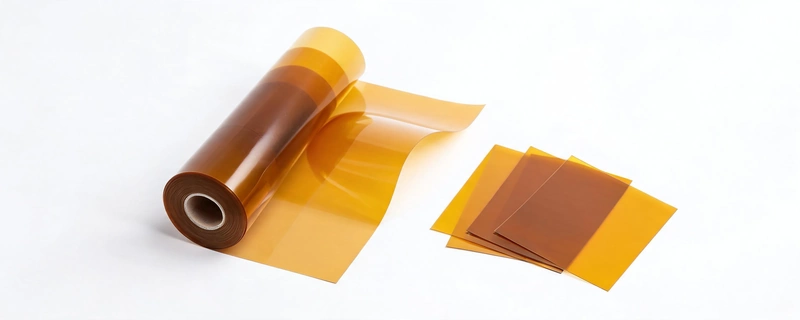
Polyimide film is a thin, flexible polymer film made from polyimide chemistry. Many commercial aromatic PI films are produced through a precursor-based process, followed by controlled thermal treatment to form the final polyimide structure.
A common commercial appearance is translucent amber or golden brown, although specialized formulations may have different colors or optical characteristics.
PI film is available in a range of thicknesses, widths and surface finishes. Common industrial thicknesses vary by manufacturer and product series, from very thin films to substantially thicker flexible film products.
2. Main Types of PI Film
Standard Polyimide Film
Standard PI film is commonly used for electrical insulation, flexible circuits and general industrial applications. It is valued for its combination of flexibility and thermal performance.
Adhesive-Backed PI Film Tape
PI film tape consists of a polyimide film backing combined with an adhesive layer. Silicone adhesive systems are common in high-temperature insulation tape applications. Other adhesive systems may be selected for different bonding requirements.
The temperature capability of the finished tape depends on both the PI film and the adhesive system. The adhesive's limitations may determine the actual service conditions.
Copper-Clad PI Film
Copper-clad polyimide film is an important material system for flexible printed circuit boards. Copper layers are bonded or formed on PI film to create flexible circuit substrates.
Depending on the product construction, copper thickness, bonding system and surface treatment, these materials are designed for different flexible electronics requirements.
Specialty PI Films
Specialized PI films may be designed for applications requiring particular optical, thermal, electrical, mechanical or surface characteristics. Selection should be based on the relevant product datasheet.
3. Key Properties of Polyimide Film
PI film is selected for its combination of properties rather than one single performance characteristic.
- Thermal stability: Many PI film grades are designed to maintain useful properties under demanding thermal conditions.
- Electrical insulation: Commonly used in insulation systems for electronic and electrical components.
- Flexibility: Thin PI film can bend and conform to suitable component geometries.
- Dimensional stability: Selected grades provide good dimensional performance over a specified temperature range.
- Mechanical strength: Film products can offer useful tensile and tear properties depending on thickness and formulation.
- Chemical resistance: Resistance varies with the chemical, temperature, exposure duration and specific film grade.
Actual property values should be taken from the technical datasheet for the selected film rather than assumed to be identical across all PI products.
4. Common Applications of PI Film
Flexible Printed Circuit Boards
PI film is widely used as a flexible substrate in flexible printed circuit boards (FPCs). Its flexibility and electrical properties make it suitable for electronic assemblies that need bending or compact routing.
Applications include consumer electronics, communication equipment, automotive electronics and selected medical devices.
Electrical Insulation
PI film is used in electrical insulation systems for motors, transformers, generators and other electrical equipment. Depending on the design, it can serve as slot insulation, phase insulation, barrier material or wrapping film.
High-Temperature Adhesive Tape
PI film is a common backing material for high-temperature adhesive tapes. These products are used in electronics manufacturing, electrical insulation, powder coating processes and other applications requiring suitable temperature-resistant masking.
Aerospace and Thermal Management
Specialized PI films may be incorporated into aerospace insulation systems and multilayer thermal-control structures. Their suitability depends on the film grade, coating, surface treatment and environmental qualification.
Industrial Manufacturing
PI film can also be used in protective layers, flexible insulation, process masking and specialized industrial assemblies.
5. How to Choose the Right PI Film Thickness
Film thickness affects flexibility, mechanical strength, electrical insulation performance and handling. The correct thickness depends on the application and design requirements.
| Application | Thickness Consideration | Key Requirement |
|---|---|---|
| Flexible Circuits | Thin film may be preferred for compact flexible designs. | Flexibility, dimensional stability and circuit compatibility. |
| Electrical Insulation | Depends on the insulation design and voltage requirements. | Dielectric performance and insulation reliability. |
| PI Adhesive Tape | Film and adhesive thickness must be considered together. | Adhesion, temperature resistance and handling. |
| Industrial Protection | Selected according to mechanical and process needs. | Durability, surface properties and compatibility. |
When requesting a quotation, specify the required thickness, width, roll length or sheet dimensions. If the application involves electrical insulation, also provide the relevant voltage and operating conditions.
6. PI Film vs. PI Adhesive Tape
PI film and PI adhesive tape are related products, but they are not interchangeable in every application.
| Feature | PI Film | PI Adhesive Tape |
|---|---|---|
| Construction | Polyimide film substrate | PI film backing plus adhesive |
| Adhesive Layer | Not necessarily included | Included |
| Typical Use | Flexible circuits and electrical insulation | Masking, wrapping and surface protection |
| Temperature Performance | Depends on film grade | Depends on both film and adhesive system |
| Specification | Film thickness, width and electrical properties | Total thickness, adhesive, adhesion and release liner |
7. Processing and Handling Considerations
Moisture Control
Polyimide films can absorb some moisture depending on the grade and environment. Moisture may affect dimensional behavior, electrical performance or processing under certain conditions.
For applications involving high-temperature processing, vacuum service or sensitive electronic assemblies, follow the manufacturer's conditioning and handling recommendations.
Cleanliness
Contamination from dust, oil, fingerprints or adhesive residue may affect bonding, coating and electronic assembly processes. Keep the film clean and use suitable packaging and handling procedures.
Storage
Store PI film in its original packaging under the supplier's recommended temperature and humidity conditions. Protect the material from dust, excessive moisture and mechanical damage.
Vacuum Applications
PI film may be used in selected vacuum applications, but the complete material system must be evaluated. Moisture, residual solvents, coatings, adhesives and surface contamination can influence outgassing behavior.
For vacuum or aerospace applications, request appropriate outgassing data and qualification information for the specific product construction.
8. How to Select a PI Film Supplier
Choosing a suitable supplier involves more than comparing the price per roll. Buyers should check product specifications, consistency and supply capability.
- Thickness range: Confirm available film thicknesses and allowable thickness variation.
- Width and format: Check standard roll widths, custom slitting and sheet options.
- Material grade: Confirm the PI film type and intended application.
- Technical documentation: Request a datasheet with relevant mechanical, thermal and electrical properties.
- Product construction: Clarify whether the material is bare film, adhesive tape or copper-clad film.
- Packaging and storage: Confirm suitable protection during transportation and storage.
9. What Information Is Needed for a PI Film Quote?
To help identify a suitable PI film, provide the following information:
- Required film thickness.
- Roll width or sheet dimensions.
- Required roll length or order quantity.
- Pure PI film, adhesive tape or copper-clad film.
- Intended application and operating temperature.
- Electrical, mechanical or surface requirements.
- Any required technical standards or documentation.
A sample specification or product reference is also helpful when matching a particular PI film to an existing application.
Frequently Asked Questions About PI Film
1. What is PI film used for?
PI film is commonly used in flexible printed circuits, electrical insulation, high-temperature adhesive tapes, industrial protection and selected aerospace applications.
2. Is PI film the same as Kapton?
Kapton is a well-known commercial polyimide film brand. PI film is the broader material category. Similar polyimide films are also produced by other manufacturers under different product names.
3. What color is polyimide film?
Many conventional aromatic PI films have a translucent amber or golden-brown appearance. Specialized formulations may have different colors or optical characteristics.
4. What thicknesses are available for PI film?
PI film is available in various thicknesses, from very thin flexible films to thicker industrial products. The available range depends on the manufacturer and product series.
5. Can PI film withstand high temperatures?
Many PI film grades are designed for demanding thermal environments. Actual continuous-use and short-term temperature limits depend on the film grade, mechanical stress and operating conditions.
6. What is the difference between PI film and PI tape?
PI film is the polyimide substrate itself. PI tape adds an adhesive layer to the film backing. The adhesive type and its temperature resistance are important when selecting tape.
7. Is PI film suitable for flexible circuit boards?
Yes. PI film is widely used as a substrate in flexible printed circuits because of its flexibility, thermal performance and electrical properties. The selected grade must meet the circuit design and manufacturing requirements.
8. Does PI film absorb moisture?
PI film can absorb moisture from the surrounding environment. The amount depends on the film formulation and conditions. Follow supplier recommendations for storage and conditioning, especially before sensitive high-temperature processing.
9. What is the difference between PI film and PI sheet?
PI film is a thin, flexible material supplied in rolls or sheets, while machinable PI sheet is a thicker semi-finished stock shape intended for manufacturing rigid components. Their material grades and processing methods may also differ.
10. What information should I provide when requesting a PI film quotation?
Provide the required thickness, width, roll length or quantity, product type, intended application and any electrical, thermal or mechanical specifications.
Looking for Polyimide PI Film?
Teda Plastics supports inquiries for high-performance engineering plastic materials, including polyimide products in different forms.
Tell us your required film thickness, width, product construction and application. Our team can discuss your material requirements and available supply options.
Request a PI Film Quote