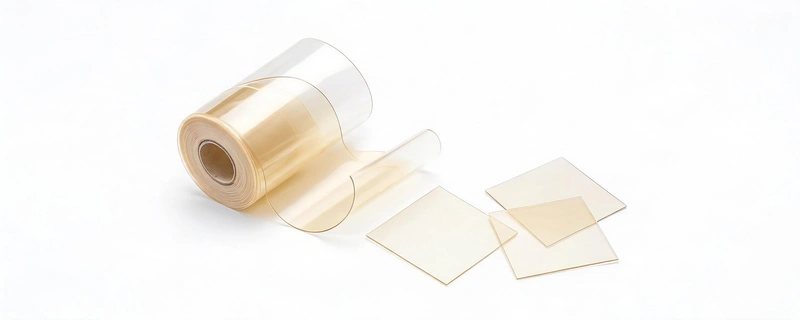
PPSU film is a specialized form of polyphenylsulfone developed for applications that require a combination of toughness, thermal performance and chemical resistance. Depending on its grade, thickness and manufacturing process, PPSU film may offer translucent or transparent appearance together with the performance characteristics associated with PPSU resin.
Unlike conventional commodity plastic films, PPSU is a high-performance amorphous thermoplastic. Its value lies in demanding service environments where ordinary films may not provide sufficient heat resistance, impact performance or durability.
1. What Is PPSU Film?
PPSU stands for polyphenylsulfone. It belongs to the sulfone polymer family and is known for its toughness, impact resistance and resistance to hot water and steam in appropriately selected grades.
PPSU film is manufactured in thin-sheet form using suitable polymer processing methods. Extrusion is one possible production route, although actual manufacturing methods depend on the film supplier and product specification.
The appearance of PPSU film is not necessarily identical across all products. Natural PPSU resin commonly has an amber or champagne tone. The transparency, haze, color and surface finish of a finished film depend on thickness, grade, processing conditions and additives.
2. Key Properties of PPSU Film
Thermal Performance
PPSU is a high-temperature engineering thermoplastic. Its glass transition temperature is typically around 220°C, although the exact value should be confirmed using the technical data for the selected grade.
The glass transition temperature should not be treated as a guaranteed continuous-use temperature for a finished film. Actual service performance depends on mechanical loading, film thickness, exposure time, temperature cycling and the surrounding environment.
Toughness and Impact Resistance
PPSU is known for its toughness compared with many conventional engineering plastics. This characteristic can be valuable in components that may experience handling, impact or repeated use. However, thin-film performance also depends on film thickness, processing quality and the design of the finished component.
Hot-Water and Steam Resistance
Selected PPSU grades offer good resistance to hot water and steam. This is one reason PPSU resin is used in certain reusable medical and equipment applications.
For film products, sterilization compatibility must be verified separately. A resin's general resistance to steam does not automatically prove that every film construction, seal, coating or finished package can withstand a particular sterilization process.
Chemical Resistance
PPSU has useful chemical resistance in many environments, but it is not universally resistant to all chemicals. Solvents, cleaning agents, concentrations, exposure temperatures and mechanical stress can affect performance.
For critical applications, compatibility testing should be conducted using the actual film grade and the intended exposure conditions.
3. Potential Applications of PPSU Film
PPSU film is a specialized material rather than a universal replacement for conventional packaging or electronic films. Its suitability should be assessed against the requirements of each application.
Medical and Healthcare Equipment
PPSU is used in selected medical and healthcare equipment applications because of its toughness and hot-water performance. Where a film component is being considered, important factors include sterilization method, sealing performance, transparency, chemical exposure and regulatory documentation.
Do not assume that a general-purpose PPSU film is automatically suitable for direct medical packaging or a regulated medical device. The exact grade and finished construction require appropriate qualification.
Electrical and Electronic Components
Depending on its electrical properties and product specification, PPSU film may be considered for selected insulating or protective components. Design engineers should verify dielectric strength, dielectric constant, dissipation factor, thickness uniformity and performance under operating temperature and humidity.
Industrial and Technical Components
PPSU film may be evaluated for protective layers, separators, specialized covers and other technical components where a combination of toughness and thermal performance is required.
Aerospace and Transportation Interiors
High-performance polymers are used in selected transportation and interior applications. However, aerospace suitability requires application-specific fire, smoke and toxicity data, as well as the relevant customer and regulatory approvals.
A material's general high-temperature performance alone is not sufficient evidence of aerospace qualification.
4. PPSU Film Processing and Fabrication
Thermoforming
Thermoforming may be considered for suitable PPSU film or sheet products. The process involves heating the material to an appropriate forming condition and shaping it using a mold or forming tool.
Successful forming depends on material thickness, temperature uniformity, forming ratio, mold geometry and cooling conditions. Not every PPSU film grade is designed for thermoforming, so the supplier's processing recommendations should be followed.
Cutting and Die Cutting
Film components may be produced through precision cutting, slitting or die-cutting processes, depending on thickness and product design. Edge quality, dimensional consistency and deformation during cutting should be considered.
Joining and Sealing
Joining methods should be evaluated according to the specific PPSU film grade and the materials being joined. Thermal bonding, mechanical fastening or other joining techniques may be considered where suitable.
For packaging or fluid-contact applications, seal integrity and long-term performance must be tested under the actual operating conditions.
5. Important Design Considerations
When selecting PPSU film for a technical application, engineers should evaluate more than the nominal thickness and appearance. The following factors can influence final performance:
- Film thickness: Influences stiffness, flexibility, forming behavior and mechanical performance.
- Transparency and haze: Confirm the optical requirements and actual measured values for the selected product.
- Dimensional stability: Consider temperature changes, moisture exposure, residual stress and forming conditions.
- Surface quality: Check scratches, surface defects, finish and cleanliness requirements.
- Chemical exposure: Verify compatibility with cleaning agents, disinfectants, solvents and process chemicals.
- Sterilization: Confirm whether the complete film construction can withstand the intended sterilization method and cycle.
- Mechanical loading: Evaluate bending, puncture, impact and long-term stress where relevant.
6. PPSU Film vs. Other High-Performance Films
PPSU should be compared with other engineering films according to the actual application rather than a single property. Different polymers offer different balances of temperature performance, mechanical behavior, chemical resistance and electrical characteristics.
| Material | General characteristics | Selection considerations |
|---|---|---|
| PPSU | Toughness, impact resistance and hot-water performance in suitable grades | Useful where toughness and thermal performance are important; film availability and qualification must be checked. |
| PEI | High-temperature performance, stiffness and useful electrical properties | Consider where rigidity and electrical performance are priorities. |
| PEEK | High thermal performance, mechanical strength and chemical resistance | Consider demanding applications where the specific film grade meets the required mechanical and chemical conditions. |
| PI | High-temperature capability and specialized electrical insulation performance | Often considered for demanding electrical and thermal insulation applications. |
| PTFE | Very low friction and broad chemical resistance | Consider where release, sliding or chemical resistance is more important than structural stiffness. |
These are general material-family comparisons, not guaranteed performance rankings. Actual film properties vary by manufacturer, grade, thickness and processing method.
7. When PPSU Film May Not Be the Right Choice
PPSU is a specialized high-performance polymer and may not be the most economical or technically appropriate choice for every film application.
- Low-cost packaging: Conventional packaging films may be more suitable where extreme thermal performance is unnecessary.
- Long-term outdoor exposure: UV stability should be evaluated. Do not assume standard PPSU film is suitable for prolonged sunlight exposure without supporting test data.
- Strict optical requirements: If very low haze or optical-grade clarity is essential, verify the actual film specification or consider other optical film materials.
- Specialized electrical insulation: Compare PPSU with PI, PEI and other qualified electrical insulation films using measured dielectric data.
- Unverified sterilization requirements: If a specific sterilization cycle is mandatory, confirm compatibility of the complete film construction before production.
8. How to Select the Right PPSU Film
Before purchasing PPSU film, define the technical requirements and confirm that the supplier can provide a product suitable for the intended process.
- Thickness and dimensions: Specify nominal thickness, width, length and allowable dimensional variation.
- Appearance: Define the required color, transparency, haze and surface finish.
- Thermal requirements: State operating temperature, exposure duration and temperature cycling.
- Processing method: Explain whether the film will be cut, thermoformed, bonded or otherwise fabricated.
- Chemical environment: Identify cleaning agents, solvents and other substances that may contact the film.
- Compliance requirements: Specify any required medical, food-contact, electrical or transportation documentation.
- Quantity and application: Provide estimated order quantity and a description of the final component.
A detailed specification helps determine whether PPSU film is suitable and whether another engineering polymer would be a better option.
Conclusion
PPSU film is a specialized high-performance polymer product that may offer a useful combination of toughness, thermal performance and hot-water resistance. Its suitability depends on the actual film grade, thickness, processing method and service environment.
For applications involving medical equipment, sterilization, electrical insulation or transportation interiors, product-specific data and finished-component validation are essential. Teda Plastics supports engineering plastic material sourcing and can discuss PPSU product requirements with overseas customers.
Frequently Asked Questions About PPSU Film
1. What is PPSU film?
PPSU film is a thin-film form of polyphenylsulfone, a high-performance amorphous thermoplastic. It is considered for specialized applications requiring toughness, thermal performance and resistance to hot water in suitable grades.
2. Is PPSU film transparent?
PPSU film may be translucent or transparent depending on the grade, thickness, additives and manufacturing process. Optical clarity should be confirmed using the specification of the actual film product rather than assumed for all PPSU films.
3. Can PPSU film withstand high temperatures?
PPSU is a high-temperature engineering thermoplastic with a typical glass transition temperature around 220°C. This value is not a guaranteed continuous-use temperature for every film. Actual service limits depend on grade, thickness, load and exposure conditions.
4. Can PPSU film be sterilized?
Some PPSU products are designed for applications involving hot water or steam. However, sterilization compatibility of a film must be verified for its exact grade, thickness, construction and processing method. The complete finished component should be validated.
5. Can PPSU film be thermoformed?
Thermoforming may be possible for suitable PPSU film or sheet products. The forming temperature, thickness, mold design and cooling conditions must be matched to the specific product. Consult the film supplier before processing.
6. Is PPSU film suitable for outdoor applications?
Outdoor suitability should not be assumed for standard PPSU film. Long-term UV exposure may affect appearance and properties. Verify UV-aging data or select a product specifically designed and qualified for the intended outdoor environment.
7. What is the difference between PPSU film and PEI film?
PPSU is often considered for toughness and hot-water performance, while PEI is known for stiffness and high-temperature performance. The better choice depends on the actual grade, mechanical loading, electrical requirements and operating environment.
8. What information is needed to request a PPSU film quotation?
Please provide the required thickness, width, length, appearance, estimated quantity and intended application. Processing requirements, operating temperature and any special compliance documentation should also be included where applicable.
Looking for PPSU Film?
Share your required dimensions, technical specifications and application details. Contact Teda Plastics to discuss your engineering plastic material requirements.
Request a Quote