What Is PEEK Powder?
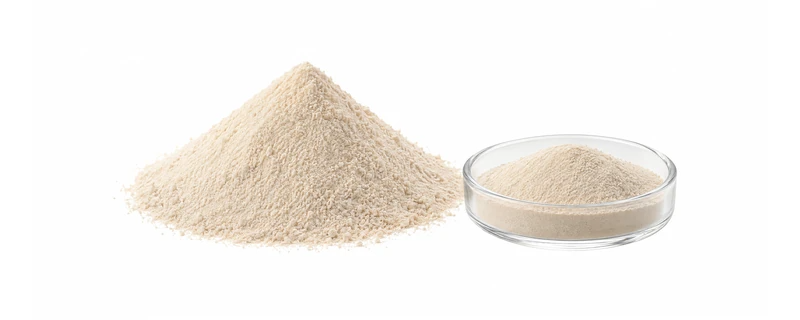
PEEK powder is a powdered form of polyetheretherketone, a high-performance semi-crystalline thermoplastic known for its mechanical strength, chemical resistance and high-temperature capability.
Compared with conventional PEEK granules, powder products are supplied in smaller particle sizes for applications that require controlled dispersion, coating deposition, compounding or powder-based manufacturing.
PEEK powder is not a single standardized product. Particle size, particle shape, molecular characteristics, crystallinity and processing behavior can differ significantly between grades and manufacturers. Selecting a powder based only on its name or nominal particle size may lead to processing problems.
How Is PEEK Powder Produced?
PEEK powder can be produced through different processes, including mechanical grinding, milling and other particle-size reduction or classification methods. The appropriate production route depends on the intended application and the required particle characteristics.
Powder preparation may involve screening or classification to control particle size distribution. Some specialized applications also require tighter control over particle shape, flowability, purity and thermal behavior.
These factors influence how the powder feeds, disperses, melts or forms a coating during subsequent processing.
PEEK Powder Grades and Particle Size
PEEK powder should be selected according to the processing method rather than simply being classified as fine or coarse. Different applications may require very different particle-size distributions.
Fine PEEK Powder
Fine PEEK powders may be used in selected coating formulations, specialty compounds and other processes requiring relatively small particles. Their suitability depends on particle distribution, flow characteristics and the application equipment.
Coarser PEEK Powder
Coarser powders may be suitable for certain compounding, coating or powder-processing operations where the equipment is designed for larger particles. The correct size range must be established through process requirements and supplier data.
Specialized PEEK Powder
Some applications require specially prepared powder with controlled particle morphology, purity, flowability or thermal characteristics. Powder intended for additive manufacturing, for example, must meet the requirements of the specific printing technology and equipment.
Understanding Particle Size Distribution: D10, D50 and D90
When comparing PEEK powder suppliers, particle size distribution (PSD) is more useful than relying on a single nominal particle size.
| Parameter | Meaning | Why It Matters |
|---|---|---|
| D10 | 10% of particles are smaller than this size | Indicates the finer end of the distribution |
| D50 | Median particle size | Provides a central reference for particle size |
| D90 | 90% of particles are smaller than this size | Indicates the coarser end of the distribution |
A powder with the same D50 as another product may still behave differently if its D10 and D90 values are different. For demanding applications, request the complete particle-size distribution and confirm the measurement method.
Main Applications of PEEK Powder
1. High-Performance Industrial Coatings
PEEK powder can be used in specialized coating systems designed for demanding thermal, mechanical and chemical environments. Depending on the coating process, powder characteristics influence feeding, deposition, melting and the final coating surface.
Coating performance also depends on substrate preparation, application equipment, heating profile, coating thickness and process control.
2. Polymer Compounding
PEEK powder may be used in selected compounding processes to prepare polymer blends or specialized formulations. Compatibility, dispersion, melt viscosity and processing stability must be evaluated for the intended formulation.
3. Additive Manufacturing
Certain specially engineered PEEK powders are developed for powder-bed additive manufacturing processes. They require controlled particle size distribution, flowability and thermal behavior to achieve consistent powder spreading and part formation.
Not every commercially available PEEK powder is suitable for SLS or other powder-bed printing systems. Always confirm compatibility with the specific machine and process.
4. Research and Specialty Processing
PEEK powders are also used in material development, laboratory research and selected specialty manufacturing processes where powdered polymer feedstock is required.
PEEK Powder: Important Technical Characteristics
PEEK powder retains the fundamental thermal and chemical characteristics of its base polymer. However, powder handling and processing behavior depend on particle properties and the specific grade.
| Characteristic | General Information | Selection Consideration |
|---|---|---|
| Polymer Type | Semi-crystalline thermoplastic | Confirm the resin grade |
| Melting Temperature | Approximately 343°C for standard PEEK | Processing conditions depend on grade and equipment |
| Particle Size | Application-dependent | Request D10, D50 and D90 |
| Particle Morphology | Depends on production method | Important for flow and powder spreading |
| Color | Typically natural beige to light brown for unfilled material | May vary with grade and formulation |
| Bulk Density | Grade and particle-dependent | Request measured data from the supplier |
The melting temperature is a polymer reference value, not a recommended processing temperature for every powder application. Actual thermal behavior and processing windows should be confirmed using the grade-specific technical data sheet and equipment requirements.
How to Choose the Right PEEK Powder
Before purchasing PEEK powder, define the application and processing conditions. The following points can help narrow down the correct grade.
- Application: Identify whether the powder is intended for coating, compounding, additive manufacturing or another process.
- Particle Size Distribution: Request D10, D50 and D90 values rather than relying only on a nominal particle size.
- Particle Shape and Flowability: These properties can influence feeding, spreading and coating consistency.
- Thermal Requirements: Confirm that the powder and processing equipment are compatible with the required temperature profile.
- Purity and Formulation: Specify whether unfilled PEEK or a modified formulation is required.
- Quality Documentation: Request a grade-specific Technical Data Sheet (TDS) and Safety Data Sheet (SDS).
- Sample Testing: Evaluate the powder using your actual processing equipment before placing a large production order.
PEEK Powder vs PEEK Granules
PEEK powder and PEEK granules are different forms of the same polymer family, but they are generally intended for different processing methods.
| Comparison | PEEK Powder | PEEK Granules |
|---|---|---|
| Physical Form | Fine or classified particles | Pellets or granules |
| Typical Processing | Specialty coatings, compounding and selected powder processes | Injection molding and extrusion |
| Feeding Method | Powder feeding systems | Pellet feeding systems |
| Key Selection Factor | Particle size, shape and flowability | Melt flow, viscosity and pellet consistency |
If your production process uses an injection molding machine or conventional extrusion line, PEEK granules are generally the appropriate starting material. You can also read our PEEK Granules Guide for more information.
PEEK Powder Storage and Handling
Proper storage helps maintain powder quality and reduce contamination. Follow the storage and handling instructions provided by the material manufacturer.
- Keep powder in sealed, suitable packaging when not in use.
- Store in a clean and dry environment.
- Avoid contamination from other polymers, dust or processing residues.
- Minimize unnecessary exposure to moisture and airborne contaminants.
- Use appropriate dust-control measures and personal protective equipment when handling fine powders.
- Follow the supplier's SDS for handling, storage and workplace safety requirements.
Do not apply a universal drying temperature or drying time to every PEEK powder. Drying requirements depend on the grade, particle characteristics, packaging history and intended process. Follow the supplier's TDS and processing recommendations.
What to Confirm Before Buying PEEK Powder
For industrial buyers, a clear technical specification helps avoid material mismatch and production delays. Before requesting a quotation, prepare the following information:
- Intended application and processing method.
- Required particle size range and PSD measurement method.
- Virgin or modified PEEK formulation.
- Required purity, color and other material specifications.
- Estimated order quantity and packaging requirements.
- Required TDS, SDS and quality documents.
- Sample evaluation requirements and target delivery destination.
Frequently Asked Questions About PEEK Powder
PEEK Powder Supply from Teda Plastics
Teda Plastics Co., Ltd. works with international buyers sourcing high-performance engineering plastics, including PEEK raw materials and semi-finished products.
When enquiring about PEEK powder, please share your intended application, required particle size, processing method and estimated quantity. Our team can review your requirements and confirm the relevant grade, technical documentation, availability and quotation.
Material specifications and application suitability should always be confirmed against the actual grade and its technical documentation before production.
Looking for a PEEK Powder Supplier?
Send us your application details and particle-size requirements. Contact Teda Plastics to discuss suitable PEEK powder grades, technical specifications and quotations.
Request a Quote WhatsApp Us