PPA (Polyphthalamide) rod is a round stock form of semi-aromatic polyamide developed for demanding engineering applications. Where suitable stock grades are available, PPA rod can be machined into cylindrical parts requiring a combination of heat resistance, stiffness and mechanical performance.
PPA is often considered for applications where conventional nylon may not provide sufficient thermal performance. However, properties vary significantly between grades, and the suitability of a rod depends on its formulation, production method and intended operating environment.
1. What Is PPA Rod?
PPA is a semi-aromatic polyamide, commonly grouped with high-temperature engineering nylons. Its polymer structure helps provide improved thermal performance and stiffness compared with many conventional aliphatic polyamides.
PPA rod is supplied as cylindrical stock for further processing. Depending on the grade and available dimensions, it may be used for turning, milling, drilling and other machining operations.
PPA compounds are widely available in different formulations, including glass-fiber reinforced molding grades. However, not every molding compound is manufactured as rod stock. The exact stock material and its properties should be confirmed with the supplier.
2. Key Properties of PPA Rod
Heat Resistance
PPA is designed for elevated-temperature engineering applications. Its actual service capability depends on the grade, applied load, exposure duration and surrounding environment.
Continuous-use temperature, heat deflection temperature, glass-transition temperature and melting temperature describe different characteristics. They should not be used interchangeably when selecting material for a working component.
Mechanical Strength and Stiffness
PPA can provide a useful balance of strength and stiffness. Reinforced formulations may offer higher tensile strength and flexural modulus than unfilled grades. The improvement depends on reinforcement type, fiber content and orientation.
Dimensional Performance
Dimensional stability is an important consideration in precision components. However, moisture uptake, temperature changes, residual stress, machining sequence and part geometry can all influence the final dimensions.
Chemical Resistance
PPA can provide useful resistance to various industrial chemicals and selected automotive fluids. Compatibility is grade-specific and should be checked under actual operating conditions, especially where fuels, oils, coolants or cleaning agents are involved.
3. PPA Rod Grades and Appearance
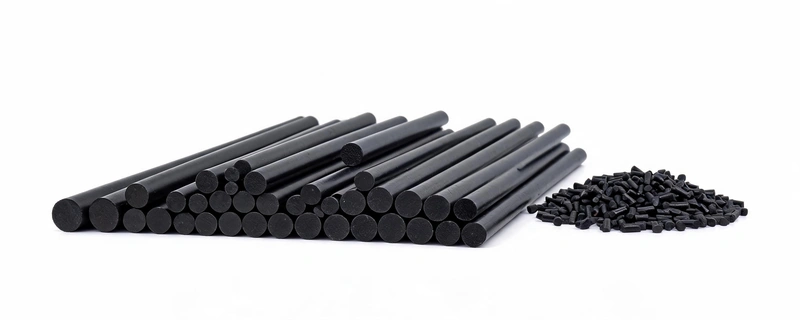
PPA rod may be offered in different colors and formulations, depending on the manufacturer and production route. Black and natural appearances may be available, but appearance alone is not a reliable indicator of grade.
- Unfilled PPA: May provide a different balance of toughness, stiffness and machining behavior.
- Glass-fiber reinforced PPA: Reinforcement can increase stiffness and strength, but may also increase tool wear and introduce directional properties.
- Mineral-reinforced PPA: Certain formulations use mineral fillers to modify stiffness and dimensional performance.
- Special-purpose PPA: Selected grades are developed for specific electrical, automotive or industrial requirements.
4. Typical Applications of PPA Rod
Automotive Components
PPA is used in selected automotive applications where thermal and mechanical performance are important. Depending on the grade and manufacturing method, possible applications include machined supports, spacers, housings and other specialized components.
For parts exposed to fuel, oil, coolant or other automotive fluids, chemical compatibility must be verified using the exact material grade and service conditions.
Electrical and Electronic Components
Selected PPA grades may be suitable for electrical components and insulating parts. Dielectric properties depend on the formulation, moisture conditioning, temperature, thickness and relevant test method.
Precision Machined Components
Where suitable PPA rod stock is available, it can be considered for turned components such as sleeves, spacers, bushings and supports. The final design should account for mechanical load, operating temperature, wear and dimensional requirements.
5. CNC Machining PPA Rod
PPA rod can be machined into custom components when the selected stock grade is suitable. Machining performance depends on the material formulation, stock quality, cutting tool, machine setup and component geometry.
Tool Selection
Sharp cutting tools with suitable geometry help reduce cutting forces and heat generation. Carbide tooling is commonly considered for engineering plastic machining. Reinforced PPA may require more wear-resistant tooling because glass fibers and mineral fillers can accelerate tool wear.
Heat Management
Excessive cutting heat can affect surface quality and dimensional consistency. Use suitable cutting conditions and ensure chips are evacuated effectively. Cooling methods should be compatible with the material and subsequent application.
Workholding and Clamping
Avoid excessive clamping pressure, particularly when machining thin-walled or slender components. Support the rod appropriately to reduce vibration, deflection and deformation during turning.
Dimensional Inspection
For precision parts, consider thermal expansion, moisture conditioning and residual stress. Inspect components after they have stabilized in the agreed measurement environment. Tolerances should be established according to the material, geometry and manufacturing capability rather than assuming one universal value.
6. PPA Rod Compared with Other Engineering Plastics
PPA should be compared with other materials based on the actual operating conditions rather than the material name alone.
| Material | General Characteristics | Selection Considerations |
|---|---|---|
| PPA | Semi-aromatic high-temperature polyamide. | Selected applications requiring elevated-temperature performance and mechanical strength. |
| PA66 | General engineering nylon with good strength and wear properties. | Conventional mechanical components and cost-sensitive designs. |
| PEEK | High-performance semi-crystalline thermoplastic with broad thermal and chemical capabilities. | More demanding thermal, chemical and mechanical environments, subject to grade and cost. |
| PPS | Semi-crystalline polymer with strong resistance to many chemicals. | Applications where chemical resistance and dimensional performance are important. |
7. How to Select the Right PPA Rod
Before ordering PPA rod, identify the requirements of the finished component. This makes it easier to evaluate the correct grade and stock dimensions.
- Required rod diameter and length.
- Unfilled, glass-filled or other reinforced grade.
- Operating temperature and expected service duration.
- Mechanical loads, wear conditions and impact requirements.
- Exposure to moisture, fuels, oils, coolants or chemicals.
- Machining method and required dimensional tolerances.
- Quantity and delivery requirements.
For custom-machined components, provide a technical drawing with dimensions, tolerances and application details. This helps clarify the required stock size and machining process.
8. Request PPA Rod from Teda Plastics
Teda Plastics supplies engineering plastic materials for industrial customers and machining applications. If you are evaluating PPA rod for a project, send us your required diameter, length, grade preference and application details.
For custom components, drawings and technical specifications are helpful when reviewing material and machining requirements.
Email: info@tedaplastics.com
WhatsApp: +86 186 5333 9873