PSU granules are thermoplastic resin pellets made from polysulfone, an amorphous high-performance polymer used in applications that require a combination of heat resistance, dimensional stability and mechanical performance. Injection-molding and extrusion grades are available for producing components with complex geometries and consistent dimensions.
What Are PSU Granules?
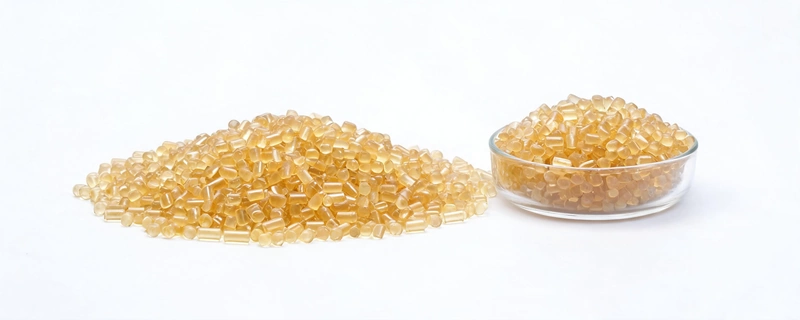
PSU stands for polysulfone. It belongs to the sulfone family of high-performance thermoplastics. Natural PSU resin commonly has a transparent amber or brownish appearance, although color and clarity can vary with grade, additives and processing conditions.
PSU is an amorphous polymer with a typical glass transition temperature around 185°C. It offers a useful combination of heat resistance, stiffness, dimensional stability and resistance to hot water in appropriately selected grades. Its performance in a finished component depends on the resin formulation, molding conditions, part geometry and operating environment.
Granules are supplied as feedstock for melt-processing operations. The exact grade should be selected according to the intended molding or extrusion process and the final component's requirements.
Key Characteristics of PSU Resin
- Heat resistance: PSU maintains useful mechanical performance at elevated temperatures within the limits of the selected grade and service conditions.
- Dimensional stability: Its amorphous structure and relatively low molding shrinkage can help produce accurately dimensioned components.
- Hot-water resistance: Selected PSU grades are used in hot-water and steam-related environments, subject to chemical and temperature validation.
- Transparency: Natural grades can offer an amber transparent appearance, useful where visual inspection is required.
- Electrical insulation: PSU can provide useful electrical insulating properties, depending on grade, temperature and environmental conditions.
- Processing flexibility: Suitable grades can be processed by injection molding or extrusion using equipment designed for high-temperature thermoplastics.
PSU Granules for Injection Molding
Injection molding is a common processing method for PSU grades formulated for this purpose. It allows manufacturers to produce detailed housings, fluid-handling components and other technical parts in repeatable production cycles.
Because PSU requires high melt-processing temperatures, the molding machine, screw, barrel, hot-runner system and mold must be suitable for the selected resin. Processing should be controlled carefully to avoid excessive residence time, thermal degradation and moisture-related defects.
Important Processing Considerations
- Material drying: Dry resin before processing when required by the grade supplier. Follow the specified temperature, time and moisture recommendations.
- Barrel temperature: Use the processing window provided in the technical data sheet rather than applying one temperature profile to every PSU grade.
- Mold temperature: Set mold temperature according to the resin grade, part thickness, surface requirements and dimensional tolerances.
- Residence time: Avoid unnecessary delays in the barrel, especially at elevated melt temperatures.
- Venting: Proper mold venting helps reduce trapped-gas defects and improves part appearance.
- Process validation: Check dimensions, appearance and mechanical performance using representative production samples.
Drying and Storage Requirements
PSU pellets are generally dried before melt processing because absorbed moisture can contribute to bubbles, silver streaks, surface imperfections and other molding defects. Moisture control is particularly important when material has been exposed to humid air after opening.
However, the recommended drying temperature and duration are not identical for every PSU resin. They can vary with the grade, packaging condition, dryer design and material handling process. Use the resin manufacturer's technical data sheet as the primary reference rather than relying on a fixed drying schedule.
For storage, keep pellets in their original sealed moisture-barrier packaging in a clean, dry location. Reseal opened bags promptly and protect the material from contamination.
Typical Applications of PSU Granules
PSU granules can be considered for components that need heat resistance, dimensional stability and suitable mechanical or electrical properties. The following are potential application areas, subject to grade selection and end-use validation.
- Fluid-handling components: Housings, connectors, valves and technical components used in selected hot-water systems.
- Reusable equipment components: Molded trays, housings and accessories where the selected grade has been validated for the required cleaning or sterilization cycle.
- Electrical components: Insulating housings, connectors and structural parts requiring elevated-temperature performance.
- Industrial equipment: Transparent covers, inspection components and molded parts used in demanding operating environments.
- Food-processing equipment: Selected components where the exact resin grade and finished article meet the applicable food-contact requirements.
Medical and food-contact applications require additional care. Not every PSU grade is medical grade or approved for food contact. Buyers should verify the specific resin documentation, applicable regulations, sterilization conditions and finished-part requirements before production.
PSU vs. PPSU vs. PES Granules
PSU, PPSU and PES are members of the sulfone polymer family. They share some characteristics but differ in their balance of heat resistance, toughness and chemical performance.
| Material | Typical Tg | General Characteristics | Selection Focus |
|---|---|---|---|
| PSU | About 185°C | Heat resistance, stiffness and dimensional stability | General high-temperature technical components |
| PPSU | About 220°C | High toughness and strong hot-water performance in suitable grades | Demanding impact and repeated hot-water exposure |
| PES | About 225°C | High-temperature performance and useful dimensional stability | Selected electrical, industrial and fluid-handling applications |
These glass transition temperatures are typical reference values, not guaranteed specifications for every commercial grade. For a final decision, compare the resin supplier's technical data, chemical compatibility information and processing recommendations.
When Should You Choose PSU Granules?
PSU may be worth considering when a molded component needs a combination of elevated-temperature performance, dimensional stability and useful hot-water resistance. It can also be an option when the natural amber transparency of the material is beneficial to product design.
For less demanding applications, a lower-cost material such as PC may be sufficient. Where higher toughness or more demanding repeated steam exposure is required, PPSU may deserve consideration. The best choice depends on the actual temperature, loading, chemical exposure, cleaning cycle, regulatory requirements and expected service life.
How to Specify PSU Granules When Requesting a Quote
To help identify a suitable PSU grade, buyers should provide as much of the following information as possible:
- Required grade or manufacturer reference, if known.
- Virgin, reinforced, modified or colored material requirements.
- Injection molding or extrusion process.
- Expected annual or trial quantity.
- Application and operating temperature.
- Exposure to hot water, steam, cleaning agents or other chemicals.
- Transparency, color and mechanical property requirements.
- Any medical, food-contact or other regulatory documentation requirements.
Providing these details helps suppliers evaluate the material more accurately and reduces the risk of selecting a grade that does not match the application.
Frequently Asked Questions About PSU Granules
1. What are PSU granules?
PSU granules are pellets made from polysulfone, an amorphous high-performance thermoplastic known for heat resistance, dimensional stability and useful mechanical properties. They are commonly supplied for processing by injection molding or extrusion, depending on the grade.
2. Are PSU granules suitable for injection molding?
Yes. Injection-molding grades of PSU can be processed on suitable thermoplastic molding equipment. Barrel temperatures, mold temperature, residence time and drying conditions should follow the manufacturer's technical data sheet and be adjusted for the machine and part design.
3. Do PSU granules need to be dried before processing?
PSU pellets are generally dried before melt processing because moisture can contribute to surface defects and processing problems. The recommended drying temperature and duration depend on the specific resin grade, packaging condition and equipment, so the supplier's technical data sheet should be followed.
4. What temperature is required for PSU injection molding?
PSU requires high processing temperatures compared with commodity plastics, but there is no single setting suitable for every grade. Melt temperature, barrel profile and mold temperature should be selected according to the resin manufacturer's processing recommendations and validated through molding trials.
5. Are all PSU granules medical grade?
No. Medical suitability depends on the exact resin grade, formulation, manufacturing controls and applicable regulatory documentation. A general-purpose PSU grade should not automatically be treated as suitable for medical devices or repeated sterilization.
6. Can PSU granules be used for food-contact components?
Some PSU grades may be considered for food-contact applications, but suitability must be confirmed for the exact grade and intended conditions. Buyers should review relevant food-contact declarations and evaluate the finished component under its actual temperature, cleaning and contact conditions.
7. What is the difference between PSU and PPSU granules?
PSU and PPSU are both amorphous sulfone polymers, but they have different property profiles. PPSU is often selected where higher impact toughness and demanding repeated hot-water or steam exposure are important. The best choice depends on grade-specific data, service conditions and cost requirements.
8. How should PSU granules be stored?
Keep PSU granules in their original sealed moisture-barrier packaging in a clean, dry environment. After opening, reseal unused material promptly and follow the supplier's recommendations for storage, handling and pre-drying.
Looking for PSU Granules?
Contact Teda Plastics to discuss PSU resin grades, processing requirements and material options for your injection molding or extrusion project.
Request a PSU Quote