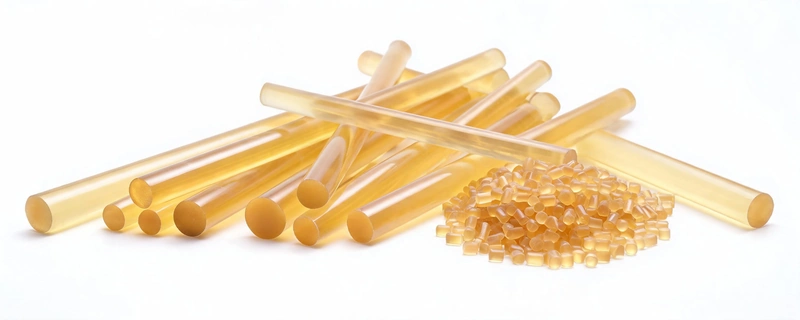
PSU rod is a round engineering plastic stock shape made from polysulfone. Its natural amber transparency, toughness, dimensional stability and useful resistance to hot water and steam make it a candidate for selected fluid-handling, laboratory, electrical and industrial components.
1. What Is PSU Rod?
PSU (Polysulfone) is an amorphous high-performance thermoplastic belonging to the sulfone polymer family. PSU rod is supplied as round stock for turning, milling, drilling and other machining operations. It allows manufacturers to produce custom cylindrical parts without designing an injection mold for each component.
Natural, unfilled PSU commonly has a transparent or translucent amber appearance. Depending on the grade and manufacturing process, the rod may be produced with different diameters, lengths and surface conditions. Color and optical clarity can vary with stock dimensions and material formulation.
Many standard PSU grades have a glass transition temperature of approximately 185°C. This contributes to its thermal performance, but it should not be confused with a universal continuous operating temperature. Actual performance depends on mechanical stress, exposure time, environment and grade.
2. Key Properties of PSU Rod
Natural Amber Transparency
Natural PSU rod can offer a transparent or translucent appearance. This can be useful for components where visual inspection is beneficial. However, optical clarity is not identical across all grades and diameters. If transparency is a functional requirement, specify the required appearance when ordering.
Heat Resistance
PSU retains useful mechanical properties at elevated temperatures compared with many general-purpose plastics. Its typical glass transition temperature is around 185°C for many standard grades. Long-term service limits should be determined from the supplier's data and the actual component loading conditions.
Hot-Water and Steam Performance
Selected PSU grades offer good resistance to hot water and steam. This can make PSU worth evaluating for certain fluid systems, laboratory equipment and reusable components. Repeated steam exposure must be validated against the actual sterilization cycle, geometry, residual stress and material grade.
Toughness and Dimensional Stability
PSU offers a useful combination of stiffness and toughness. It can be machined into functional components where dimensional consistency is important. Nevertheless, stock quality, machining stress, clamping and temperature changes can influence the final dimensions.
Electrical Insulation
PSU is also used in selected electrical and electronic components. Its electrical performance depends on the grade, temperature, moisture exposure, part thickness and test conditions. Confirm the required dielectric and insulation data before specifying the material.
3. Typical Applications of PSU Rod
Medical and Laboratory Equipment Components
Selected PSU grades may be considered for instrument components, equipment housings, laboratory parts and fluid-handling elements. Its transparency and hot-water performance can be useful in suitable designs.
However, standard PSU rod should not automatically be described as medical-grade. Patient-contact suitability, sterilization compatibility and regulatory acceptance depend on the exact resin grade and finished component. Documentation and application validation are essential.
Fluid Handling Components
PSU rod can be machined into selected connectors, fittings, valve components, manifolds and other fluid-system parts. Its natural amber appearance may help with visual inspection in some designs. Chemical compatibility must be checked for the actual fluid, concentration, temperature and exposure time.
Food and Beverage Processing Equipment
Selected PSU materials may be suitable for certain components in food-processing environments, particularly where hot-water exposure is involved. Food-contact approval is grade- and market-specific, so confirm the relevant documentation before use.
Electrical and Industrial Components
PSU rod can be machined into insulating supports, bushings, spacers and custom equipment components. The material should be selected according to mechanical loads, temperature, electrical requirements and environmental conditions.
4. When PSU Rod May Not Be the Best Choice
PSU has useful engineering properties, but some applications may require a different polymer.
- Strong solvent exposure: Some organic solvents can cause swelling, crazing or stress cracking. Check compatibility with the actual chemical and operating conditions.
- Demanding chemical environments: PSU is not universally resistant to acids, alkalis or cleaning agents. PTFE or PEEK may be worth evaluating depending on the chemical and temperature.
- Outdoor UV exposure: Long-term sunlight can cause discoloration and may affect properties. Consider UV-stabilized materials or protective measures for outdoor service.
- Higher mechanical or thermal demands: PEEK or other high-performance materials may be more suitable when the design requires greater strength retention, wear performance or chemical resistance.
PTFE and PEEK are not automatic replacements for PSU. Each material has different stiffness, wear, temperature and processing characteristics. Select based on the complete application rather than one isolated property.
5. CNC Machining PSU Rod
PSU rod is suitable for producing custom turned and milled parts. Typical machining operations include turning, facing, drilling, boring, threading and milling. Process control is important when manufacturing precision components.
Use Sharp Cutting Tools
Sharp tools help reduce cutting forces and friction. Dull tools can generate excessive heat and contribute to poor surface finish, burrs or stress-related damage. Tool geometry and cutting parameters should be matched to the rod grade and part geometry.
Control Heat and Chip Evacuation
Excessive localized heat can affect surface quality and dimensional stability. Avoid unnecessary tool rubbing and ensure chips are removed effectively, especially during drilling and deep machining. Coolant selection should be based on compatibility with the specific PSU grade.
Use Stable Workholding
Clamp the rod securely without excessive pressure. Uneven or concentrated clamping forces can introduce stress or distort thin sections. Support long or slender workpieces appropriately during turning and milling.
Manage Internal Stress
For complex components or significant material removal, staged machining may help reduce uneven stress release. Allow parts to stabilize before final inspection when tight dimensional requirements apply. Any annealing or stress-relief treatment should follow the supplier's recommendations for the exact material grade and stock history.
Inspect Critical Dimensions
Check diameters, concentricity, bore dimensions and thread quality against the drawing. For precision parts, consider the effects of temperature and measurement conditions when assessing final dimensions.
6. PSU Rod vs. PEEK Rod vs. PTFE Rod
These materials serve different engineering purposes and should not be treated as direct substitutes.
- PSU rod: Offers natural amber transparency, useful heat resistance and hot-water performance in selected applications.
- PEEK rod: A semi-crystalline high-performance thermoplastic often chosen for demanding mechanical loads, wear conditions, elevated temperatures and chemical environments.
- PTFE rod: Known for very low friction and broad chemical resistance, but has much lower stiffness and greater tendency to deform under sustained load.
The correct selection depends on operating temperature, mechanical load, chemical exposure, dimensional requirements, friction and total component cost.
7. How to Select the Right PSU Rod Size
Before ordering PSU round rod, consider the following points:
- Diameter: Choose a stock diameter that allows sufficient machining allowance without excessive material waste.
- Length: Confirm the required cut length and the number of finished components.
- Material grade: Specify natural or modified PSU and confirm any application-specific requirements.
- Appearance: State whether natural amber transparency or a particular color is required.
- Operating conditions: Provide temperature, pressure, fluid contact, cleaning agents and sterilization requirements.
- Drawing and tolerance: Share the component drawing and critical dimensions if you require CNC machining.
Clear specifications help the supplier identify a suitable stock size and assess whether the selected material is appropriate for the finished component.
8. PSU Rod Supply from Teda Plastics
Teda Plastics supplies engineering plastic materials in different forms for industrial buyers, distributors and machining companies. PSU rod can be considered for custom components requiring a combination of transparency, thermal performance and hot-water resistance in suitable environments.
When requesting a quotation, please provide the required diameter, length, quantity and application. For custom-machined parts, send your technical drawings and specify the critical tolerances and surface requirements.
Frequently Asked Questions About PSU Rod
1. What is PSU rod?
PSU rod is a round stock shape made from polysulfone, an amorphous high-performance engineering thermoplastic. It is commonly used as raw material for machining custom cylindrical components, connectors, housings and other industrial parts.
2. Is PSU rod transparent?
Many natural, unfilled PSU rod grades have a transparent or translucent amber appearance. Actual clarity and color depend on the grade, diameter, manufacturing process and additives.
3. What is the heat resistance of PSU rod?
The glass transition temperature of many standard PSU grades is approximately 185°C. This is not a recommended continuous service temperature. Practical limits depend on the grade, mechanical load, exposure time and operating environment.
4. Can PSU rod withstand repeated autoclaving?
Selected PSU grades can be suitable for hot-water and steam exposure. Repeated autoclaving performance depends on the exact grade, cycle temperature, pressure, duration, number of cycles and component design. Validate the finished part under actual conditions.
5. Can PSU rod be CNC machined?
Yes. PSU rod can be turned, milled and drilled into custom components. Sharp tools, controlled cutting forces, stable workholding and effective chip removal help reduce heat buildup, surface damage and dimensional variation.
6. Is PSU rod suitable for medical instruments?
Selected PSU grades may be used in medical equipment components. However, not every standard PSU rod is medical-grade or approved for patient-contact applications. Confirm grade documentation and validate the finished component against the applicable requirements.
7. What is the difference between PSU and PEEK rod?
PSU and PEEK differ in polymer structure, temperature capability, chemical resistance, mechanical performance and cost. PSU offers natural amber transparency and useful hot-water performance in selected applications. PEEK is a semi-crystalline high-performance thermoplastic often chosen for more demanding mechanical, thermal or chemical environments.
8. How do I select the correct PSU rod diameter?
Choose a diameter based on the finished component dimensions, machining allowance, tolerances, clamping method and material removal requirements. Share your drawing and quantity with the supplier to check suitable stock dimensions.
Looking for PSU Rod or Custom Machined Parts?
Contact Teda Plastics with your required diameter, length, quantity and application details. We can review your material requirements and quotation information.
Request a PSU Rod Quote