PES film (Polyethersulfone film) is a specialty polymer film used in applications that require a combination of thermal performance, dimensional stability and electrical insulation. Depending on its grade and manufacturing process, PES film can also offer useful optical and mechanical characteristics.
PES is an amorphous high-performance thermoplastic. Its typical glass transition temperature is around 225°C, although actual material properties and operating limits depend on the grade and application. PES film is therefore considered for selected industrial, electrical, filtration and healthcare-related uses.
1. What Is PES Film?
PES film is produced from polyethersulfone resin through a suitable film manufacturing process. It is an amorphous polymer material with a relatively high glass transition temperature and good stiffness.
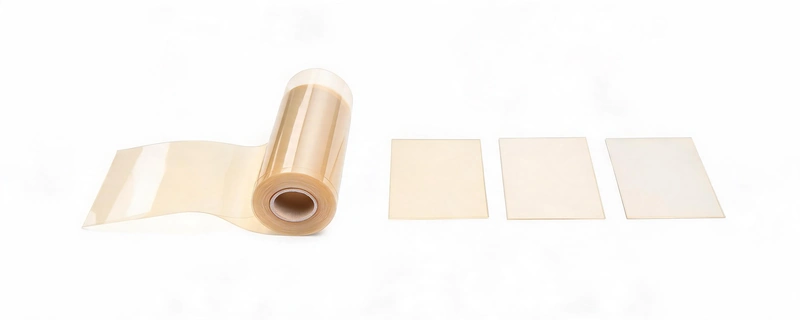
Depending on the formulation and production method, PES film may be supplied in different thicknesses, widths and surface finishes. It may be available as rolls or cut sheets, depending on the supplier and manufacturing specification.
Its combination of thermal and mechanical characteristics makes PES interesting for applications where conventional commodity films may not provide the required performance.
2. Key Properties of PES Film
Thermal Performance
PES has a typical glass transition temperature of approximately 225°C. This is an important material characteristic, but it should not be interpreted as a guaranteed continuous-use temperature for every film. Actual performance depends on grade, thickness, mechanical load, exposure time and operating conditions.
Transparency and Appearance
Certain PES film grades can provide transparent or translucent characteristics. The actual optical appearance depends on resin formulation, film thickness, processing conditions, additives and surface quality.
If high optical clarity, low haze or a specific color is required, these requirements should be confirmed with the film supplier before selecting a material.
Mechanical Strength and Dimensional Stability
PES is known for its stiffness and useful mechanical performance at elevated temperatures compared with many general-purpose plastics. Its dimensional behavior under load and heat depends on the particular film grade and application design.
Electrical Insulation
PES can offer electrical insulating properties that make it relevant to selected electrical and electronic applications. Dielectric strength, dielectric constant and other electrical values must be checked against the technical data for the specific film grade and thickness.
3. Common Applications of PES Film
Electrical and Electronic Insulation
PES film may be considered for selected insulating layers, electrical components and electronic assemblies that require a high-performance thermoplastic film. The appropriate grade should be selected according to voltage, temperature, dielectric requirements and processing method.
Industrial and High-Temperature Applications
In industrial equipment, PES film may be used where a combination of stiffness, thermal characteristics and dimensional stability is important. Actual suitability depends on the operating environment and the mechanical requirements of the component.
Filtration and Membrane-Related Uses
PES is also used in specialized membrane and filtration technologies. However, membrane products are engineered materials with specific pore structures, surface characteristics and manufacturing processes. General-purpose PES film should not be assumed to have filtration membrane performance.
Healthcare-Related Applications
Certain PES materials are used in healthcare-related applications. For film products, suitability depends on the grade, manufacturing controls, regulatory documentation and validation of the finished product.
Medical packaging is a particularly demanding application. A film must be evaluated as part of the complete packaging system, including sealing, barrier performance, sterilization compatibility and packaging integrity.
4. PES Film for Medical Packaging
PES film may be considered for selected healthcare or medical-device packaging designs when a suitable grade and validated packaging construction are available.
However, transparent appearance alone does not establish suitability for medical packaging. A complete assessment may need to include:
- Material grade and supplier documentation.
- Optical clarity and haze requirements.
- Film thickness and mechanical strength.
- Sealability and compatibility with other packaging layers.
- Barrier requirements for the packaged product.
- Compatibility with the intended sterilization method.
- Applicable regulatory and packaging validation requirements.
5. Sterilization and Temperature Considerations
The thermal characteristics of PES make it relevant to some applications involving elevated temperatures. Nevertheless, sterilization compatibility must be evaluated for the specific film product rather than assumed from the bulk resin's general properties.
Steam Sterilization
Steam sterilization involves heat, moisture and pressure. Whether a PES film can withstand a particular autoclave cycle depends on its grade, thickness, residual stress, processing history and the design of the finished product.
Gamma Sterilization
Radiation exposure can affect polymer properties, color and long-term performance. The response depends on the material formulation and radiation dose. Gamma compatibility should be confirmed through supplier data and application-specific testing.
Repeated Sterilization
Repeated sterilization can produce different results from a single exposure. If a component or packaging material is intended for repeated cycles, dimensional stability, mechanical properties, optical characteristics and packaging integrity should be evaluated after the required number of cycles.
6. PES Film Processing and Fabrication
PES film can be converted into different component formats depending on the film grade and manufacturing method. Processing should follow the supplier's recommendations.
Cutting and Die Cutting
Cutting and die-cutting methods may be used to produce components with defined outlines. Tool condition, film thickness and support during cutting influence edge quality and dimensional consistency.
Thermoforming
Certain PES film grades and thicknesses may be suitable for thermoforming. Forming temperature, heating uniformity, drying, mold design and cooling conditions all influence the final shape and surface quality.
Thermoforming capability should be confirmed for the specific product. Do not assume that every PES film can be formed into complex three-dimensional packaging shapes.
Lamination and Bonding
PES film may be incorporated into multilayer structures or assemblies where the application requires additional functions. Adhesive selection, surface preparation and compatibility with other layers should be evaluated before production.
7. PES Film vs. Other High-Performance Polymer Films
PES is one of several high-performance thermoplastics used in film applications. The best choice depends on the required temperature performance, flexibility, chemical exposure, optical characteristics and electrical properties.
| Material | General Characteristics | Selection Considerations |
|---|---|---|
| PES | High glass transition temperature, stiffness and useful thermal performance. | Consider for applications requiring thermal and dimensional performance in a suitable film grade. |
| PEI | Amorphous high-performance thermoplastic with useful thermal and electrical properties. | Compare optical, mechanical and processing requirements by grade. |
| PI | High-temperature polymer family with specialized film products. | Consider when very high thermal performance or specialized electrical insulation is required. |
| PTFE | Low friction and broad chemical resistance. | Consider when release, sliding or chemical resistance is more important than stiffness and optical clarity. |
| PEEK | High-performance thermoplastic with strong mechanical and thermal characteristics. | Consider for demanding mechanical applications where suitable film products are available. |
These are general material-family comparisons, not guaranteed specifications. Film grade, thickness, additives and manufacturing method can significantly change the final properties.
8. Limitations and Selection Considerations
PES film is a specialized material, and it is not automatically the best choice for every transparent or high-temperature film application.
- UV exposure: Long-term outdoor performance should be verified for the exact grade. UV exposure may cause discoloration or property changes in some formulations.
- Optical requirements: Transparency, haze and color can vary with thickness and processing.
- Chemical compatibility: Resistance depends on the chemical, concentration, temperature, exposure time and stress.
- Processing limitations: Thermoforming, bonding and cutting methods must be suitable for the specific film.
- Application validation: Medical, food-contact and sterilization-related uses require appropriate documentation and testing.
9. How to Specify PES Film for Your Project
A clear specification helps reduce uncertainty during material selection and quotation. When contacting a supplier, consider providing the following information:
- Required film thickness and tolerance.
- Film width, length and roll or sheet format.
- Transparent, translucent or colored appearance.
- Required optical clarity or haze, if applicable.
- Operating temperature and exposure conditions.
- Mechanical and electrical performance requirements.
- Intended fabrication method, such as cutting or thermoforming.
- Required quantity and target delivery schedule.
- Any medical, food-contact or sterilization documentation needs.
10. PES Film Supply from Teda Plastics
Teda Plastics supports overseas buyers looking for engineering plastic materials and application-oriented material solutions. For PES film inquiries, we recommend confirming the required dimensions, appearance, performance and intended application before selecting a suitable product.
If you have a technical specification or an existing material reference, you can send it to our team for review. We can discuss your requirements and check the available material options.
Frequently Asked Questions
1. What is PES film?
PES film is a film made from polyethersulfone, an amorphous high-performance thermoplastic. Depending on the grade and manufacturing process, it can offer thermal performance, stiffness, dimensional stability and electrical insulation.
2. Is PES film transparent?
Some PES films are transparent or translucent, but optical clarity depends on the resin grade, film thickness, additives, processing conditions and surface finish. Not every PES film is optically clear.
3. Can PES film withstand high temperatures?
PES is a high-temperature thermoplastic with a typical glass transition temperature around 225°C. Actual film service limits depend on grade, thickness, mechanical loading, exposure time and the surrounding environment.
4. Is PES film suitable for medical packaging?
Certain specially designed PES films may be considered for healthcare-related applications. Medical packaging suitability must be confirmed through grade documentation, packaging-system testing, regulatory requirements and validation of the intended sterilization process.
5. Can PES film be sterilized by autoclaving?
The suitability of PES film for steam sterilization depends on the specific film grade, thickness, processing history and packaging design. Repeated sterilization performance should be validated under the actual temperature, pressure and cycle conditions.
6. Is PES film suitable for flexible electronics?
PES film may be considered for selected electrical and electronic applications because of its thermal and insulating characteristics. Use as a flexible electronic substrate depends on dimensional stability, surface quality, dielectric requirements and compatibility with the manufacturing process.
7. Can PES film be thermoformed?
Some PES film grades and thicknesses may be suitable for thermoforming. Forming temperature, drying, heating uniformity and cooling conditions should be established using the film supplier's processing recommendations and application trials.
8. What information should I provide when sourcing PES film?
Useful information includes required thickness, width, roll or sheet format, transparency requirements, operating temperature, electrical or mechanical properties, quantity and intended application. Any medical, food-contact or sterilization requirements should also be specified.