PES (Polyethersulfone) granules are thermoplastic resin pellets used in suitable extrusion and injection molding processes. PES is a high-performance amorphous polymer known for its stiffness, thermal performance, dimensional stability and resistance to hot water and steam in appropriate grades.
PES pellets are selected for molded components that need to maintain their functional properties under demanding thermal or environmental conditions. The correct resin grade depends on the required mechanical properties, processing method, regulatory requirements and final application.
1. What Are PES Granules?
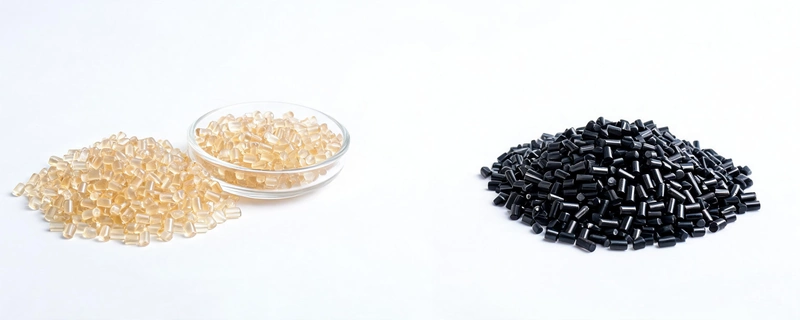
PES granules are pelletized polyethersulfone resin designed for melt processing. They are commonly supplied in sealed packaging to protect the material from contamination and moisture during storage and transportation.
Natural PES resin is often transparent or translucent with an amber appearance. Different grades may be available for injection molding, extrusion or specialized applications. Reinforced and modified formulations may also be available depending on the manufacturer's product range.
PES is an amorphous thermoplastic with a typical glass transition temperature of approximately 225°C. Its actual processing window and performance characteristics should always be confirmed using the technical data sheet for the selected grade.
2. Key Properties of PES Granules
PES resin is considered when conventional engineering thermoplastics may not provide the required balance of temperature resistance, stiffness and dimensional stability. Important characteristics include:
- High-temperature performance: PES retains useful mechanical properties at elevated temperatures. The maximum operating conditions depend on the specific grade, loading and environment.
- Hydrolysis resistance: Suitable PES grades offer good resistance to hot water and steam exposure.
- Dimensional stability: Its stiffness and relatively stable dimensions make it useful for precision molded components.
- Electrical insulation: PES provides useful electrical properties for selected electronic and electrical components.
- Transparency: Natural unfilled PES grades can be transparent or translucent amber, depending on the formulation and molded part thickness.
- Flame performance: Certain PES grades offer favorable flame performance. Confirm the relevant classification for the exact resin grade.
3. Typical Applications of PES Granules
Medical and Laboratory Equipment
Selected PES grades may be considered for laboratory components, instrument housings, reusable equipment parts and other applications exposed to hot water or steam sterilization.
Medical use requires more than selecting a polymer family. The specific resin grade, supplier documentation, sterilization performance, cleaning chemicals and finished-device requirements must all be evaluated.
Fluid Handling Components
PES can be used in selected molded connectors, manifolds, housings and fluid-handling components where dimensional stability and hot-water resistance are important. Compatibility with the actual fluid must be verified.
Food Processing Equipment
Selected PES grades may be considered for components in food-processing equipment, particularly where thermal performance and cleaning conditions are important.
Food-contact suitability is grade- and jurisdiction-specific. Confirm the relevant compliance documentation and intended conditions of use before specifying a material for food-contact applications.
Electrical and Electronic Components
PES resin may be used for selected electrical housings, insulating components and precision molded parts that require a combination of thermal performance and dimensional stability.
4. PES Injection Molding Considerations
PES is a high-temperature engineering thermoplastic. Processing requires suitable equipment, temperature control and a resin grade designed for the intended molding process.
- Material drying: Follow the resin manufacturer's recommended drying temperature, drying time and target moisture level. Do not assume one drying schedule applies to every grade.
- Barrel temperature: Set the processing temperature according to the specific grade's recommended melt-processing window.
- Mold temperature: Use an appropriate mold temperature to support filling, surface quality and dimensional consistency.
- Residence time: Avoid unnecessary residence time at elevated temperatures, which may increase the risk of material degradation.
- Injection parameters: Optimize injection speed, pressure and holding conditions according to part geometry and material behavior.
- Part design: Consider wall thickness, gate location, draft angles and shrinkage behavior during mold design.
5. When Should You Choose PES Granules?
PES granules may be a suitable choice when your molded component requires a combination of:
- Good stiffness and dimensional stability.
- Useful performance at elevated temperatures.
- Resistance to hot water and suitable steam exposure.
- Electrical insulating properties.
- Transparent or translucent natural material appearance.
- A high-performance thermoplastic suitable for the intended molding process.
If your application does not require high-temperature performance, a lower-cost material such as PC, PET or another engineering thermoplastic may be worth evaluating. The final choice should consider mechanical loading, operating temperature, chemical exposure and required service life.
6. PES vs. PSU vs. PPSU Granules
PES, PSU and PPSU are all members of the sulfone polymer family. They share certain characteristics but differ in toughness, thermal performance and application suitability.
| Material | General Characteristics | Selection Considerations |
|---|---|---|
| PES | High stiffness, thermal performance and hydrolysis resistance in suitable grades. | Consider when rigidity and hot-water performance are important. |
| PSU | Good dimensional stability, transparency and hot-water resistance. | Consider for applications requiring a balance of transparency and mechanical properties. |
| PPSU | High impact strength and good resistance to repeated steam exposure in suitable grades. | Consider when toughness and repeated sterilization performance are important. |
These are general comparisons. Actual performance depends on the selected resin grade, processing conditions and component design. Always compare technical data sheets before making a final selection.
7. What to Check Before Ordering PES Granules
Before requesting a quotation, prepare the following information to help identify the right resin grade:
- Application: Medical equipment, fluid handling, electrical parts or industrial molding.
- Grade: Required PES grade or reference specification.
- Processing method: Injection molding or extrusion.
- Material requirements: Unfilled, reinforced, natural or colored grade.
- Quantity: Sample requirement or production volume.
- Performance requirements: Temperature, mechanical loading and chemical exposure.
- Documentation: Technical data sheet, SDS and application-specific compliance documents where required.
If you have an existing resin specification or molded-part drawing, sharing it with your supplier can help evaluate the appropriate material and processing requirements.
8. Frequently Asked Questions About PES Granules
1. What are PES granules used for?
PES granules are used in suitable injection molding and extrusion processes to manufacture high-performance components. Applications may include laboratory equipment, fluid-handling parts, electrical components and selected industrial products.
2. Are PES granules suitable for injection molding?
Yes. PES is a melt-processable thermoplastic, and suitable grades are used for injection molding. The machine, mold and processing conditions must be appropriate for high-temperature engineering resin processing.
3. What temperature is required to process PES granules?
PES requires high-temperature melt processing, but the exact barrel and mold temperatures depend on the resin grade and equipment. Follow the manufacturer's processing guide rather than applying a single temperature range to all PES products.
4. Do PES granules need to be dried before molding?
Follow the resin manufacturer's drying recommendations before processing. Drying temperature, time and target moisture level vary by grade, packaging condition and storage history.
5. Are all PES granules medical grade?
No. PES is a polymer family, not an automatic medical-grade designation. Medical applications require a suitable specified resin grade, supplier documentation, regulatory assessment and finished-device validation.
6. Can PES granules be used for food-contact applications?
Some PES grades may be suitable for specific food-contact applications, but compliance depends on the grade, jurisdiction and intended conditions of use. Request the relevant documentation before specifying the material.
7. What is the difference between PES and PPSU granules?
PES is often selected for its stiffness, thermal performance and hydrolysis resistance. PPSU is often considered when higher impact toughness and repeated steam exposure are important. Compare specific grades and application requirements.
8. What information is needed for a PES granules quotation?
Provide the required grade, quantity, processing method, material formulation and application requirements. If possible, include a technical specification or reference resin grade for evaluation.
Looking for PES Granules?
Teda Plastics supplies engineering plastic materials in different forms, including PES granules, powder, sheets and rods. Contact us with your resin grade, quantity and processing requirements to discuss suitable material options.
Request a PES Granules Quote